Challenges faced
For a long time, our auditing process was defined by heavy manual labor and constant context-switching. Every time we identified an issue, the 'real' work stopped so the documentation chores could begin. It was a clunky, multi-step ordeal: snap a screenshot, toggle over to PowerPoint, find the right slide, drop the image, and then try to remember the specific nuances of the description you were about to write.
By the time you finished formatting one finding, you’d lost your momentum on the next. These constant interruptions created a fragmented workflow where formatting inconsistencies were inevitable and human error was high. It became painfully obvious that we weren’t just auditing; we were acting as part-time slide designers. We realized we needed a centralized, 'single-pane-of-glass' solution that would allow us to capture and document findings instantly, keeping our focus on the audit rather than the tools.
Solution
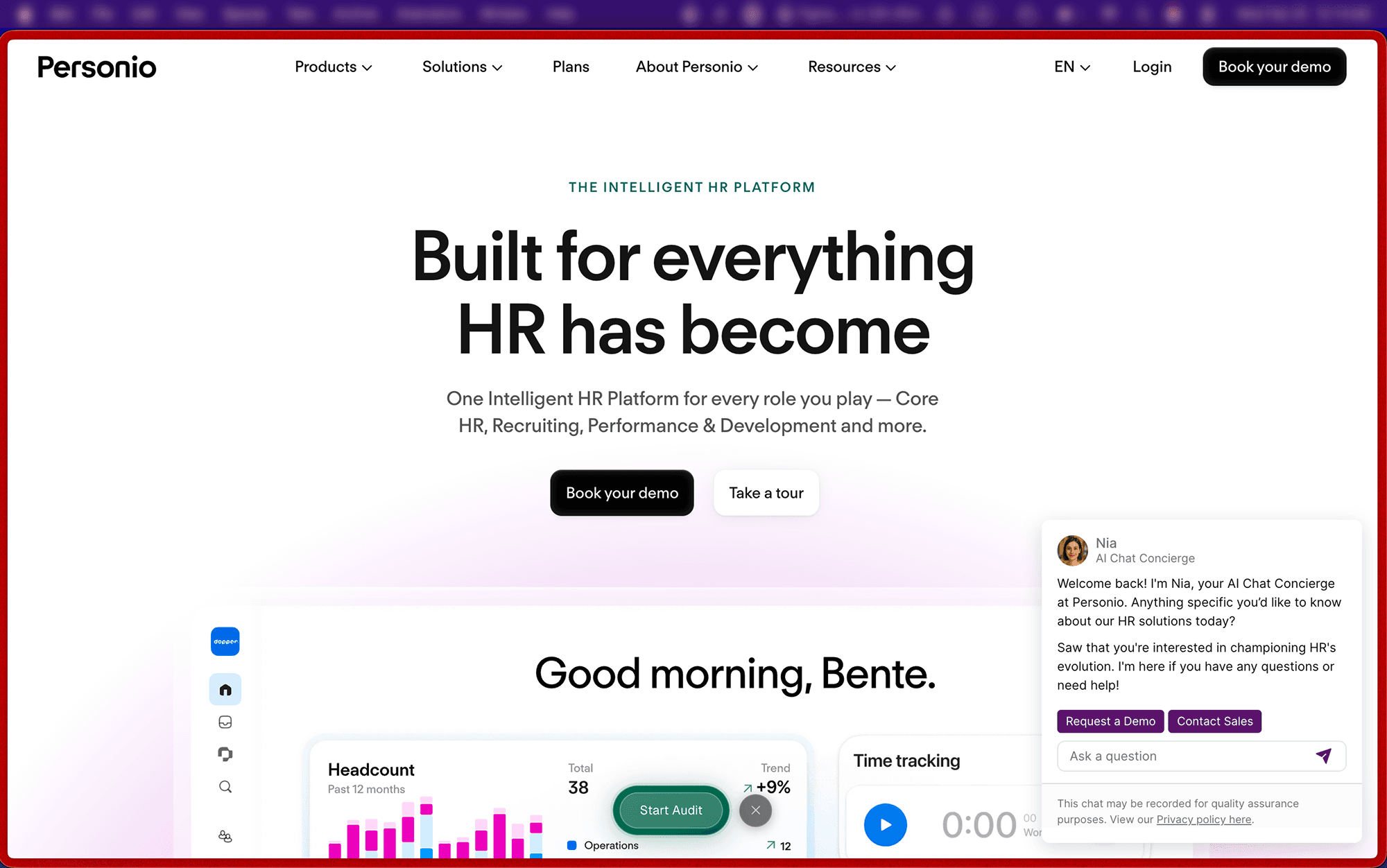
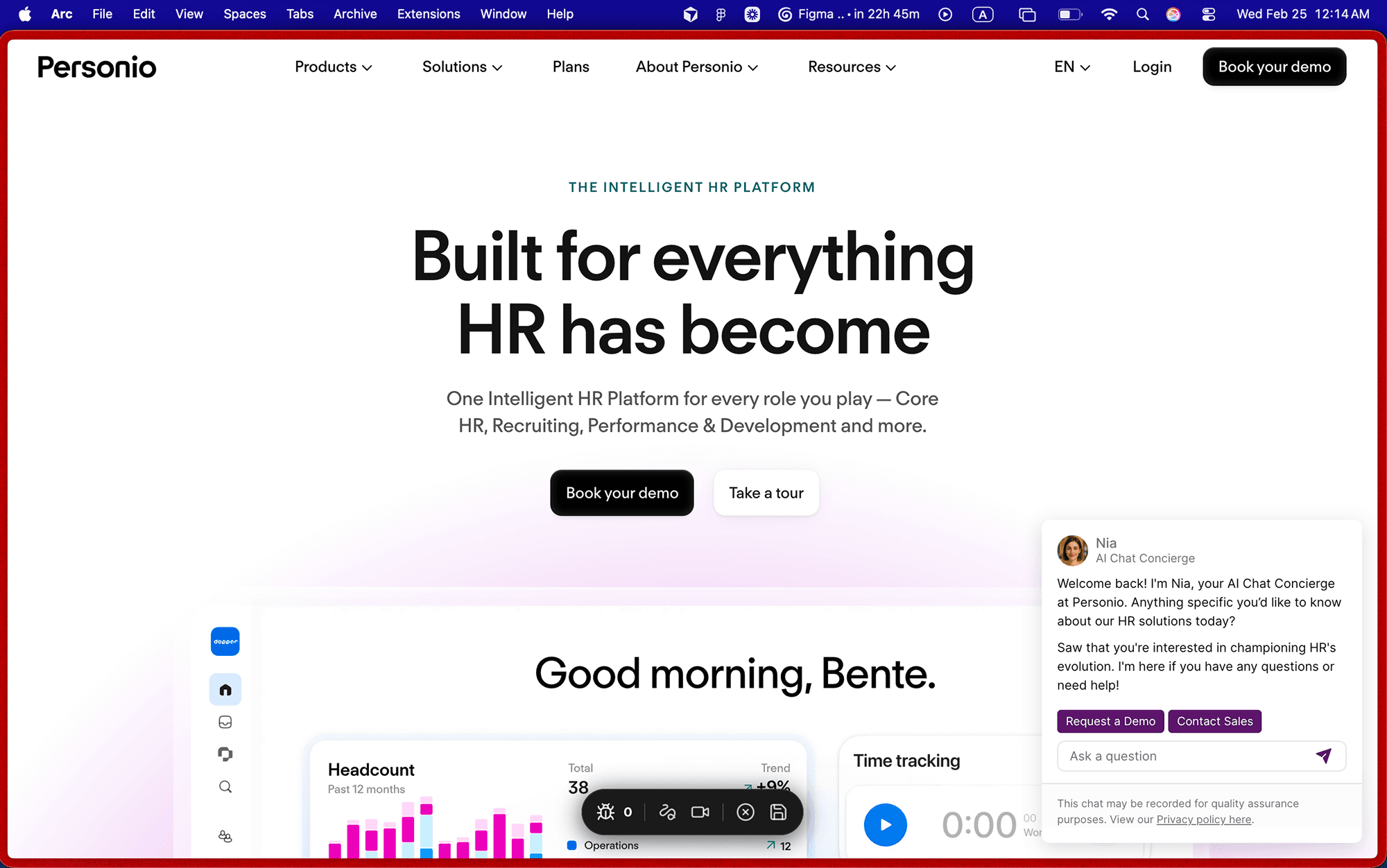
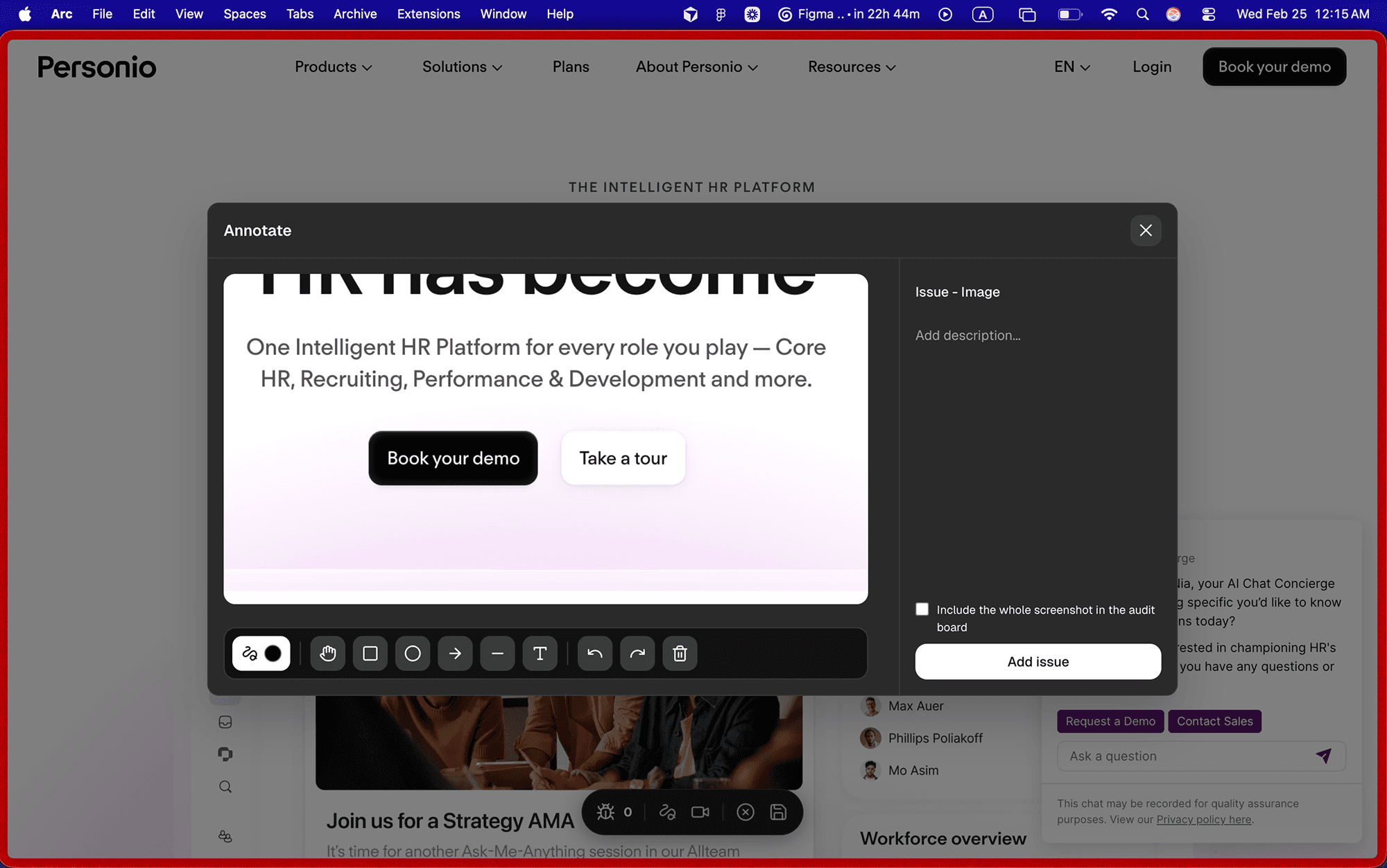
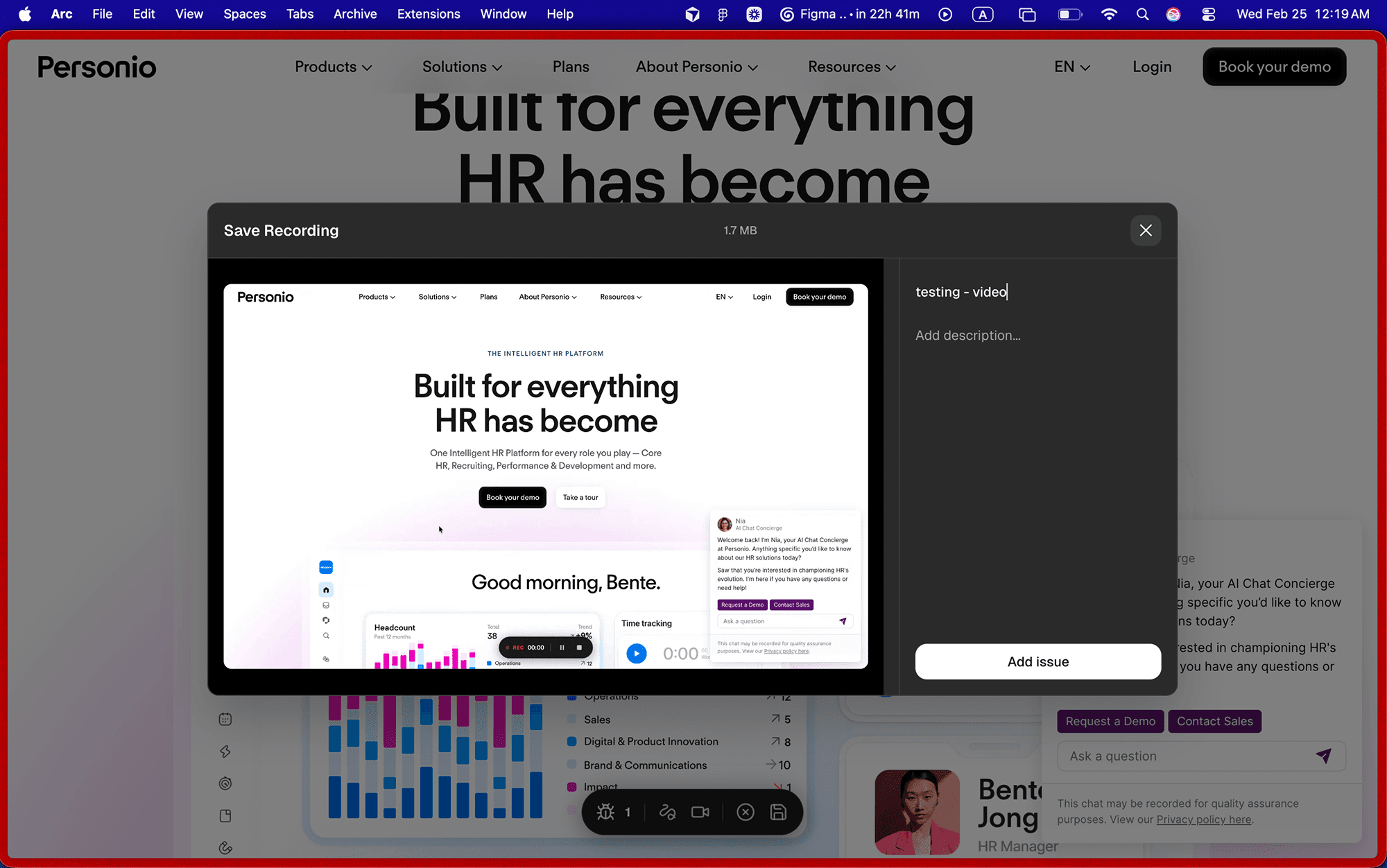
Tired of the constant context-switching, I built Loupe, a dedicated auditing tool designed to live where the work actually happens. Whether you're using the Chrome extension or the web platform, Loupe cuts out the middleman.
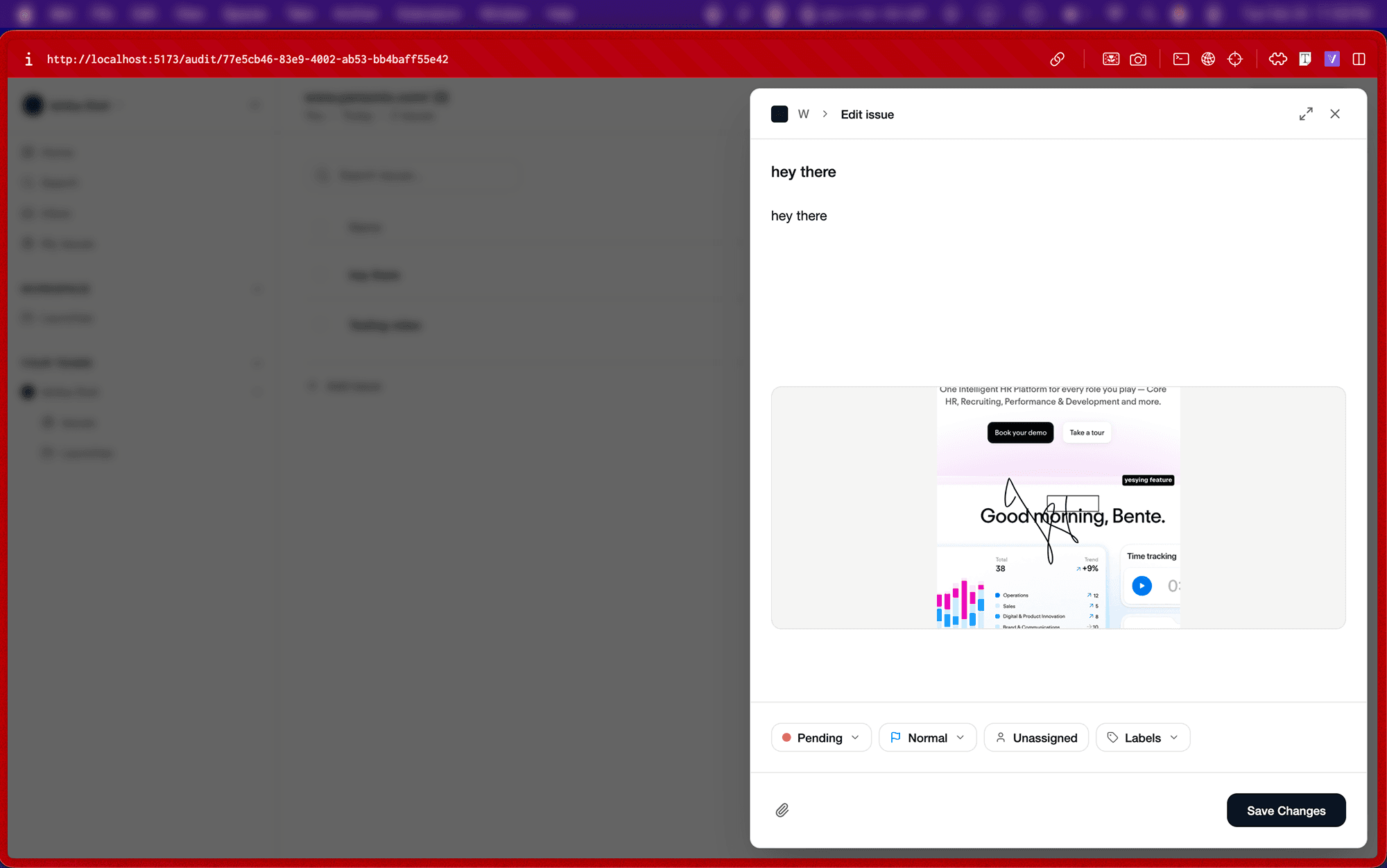
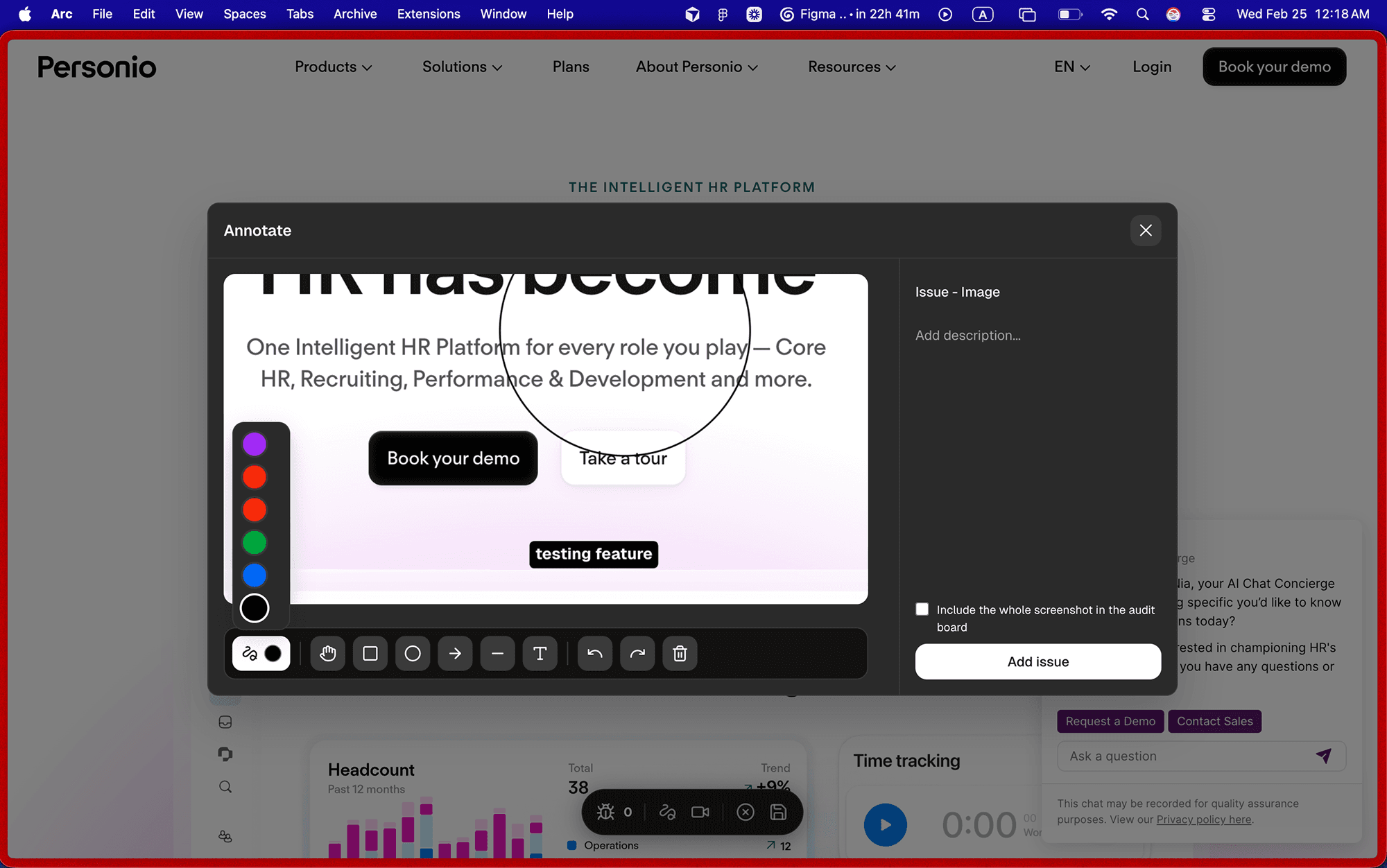
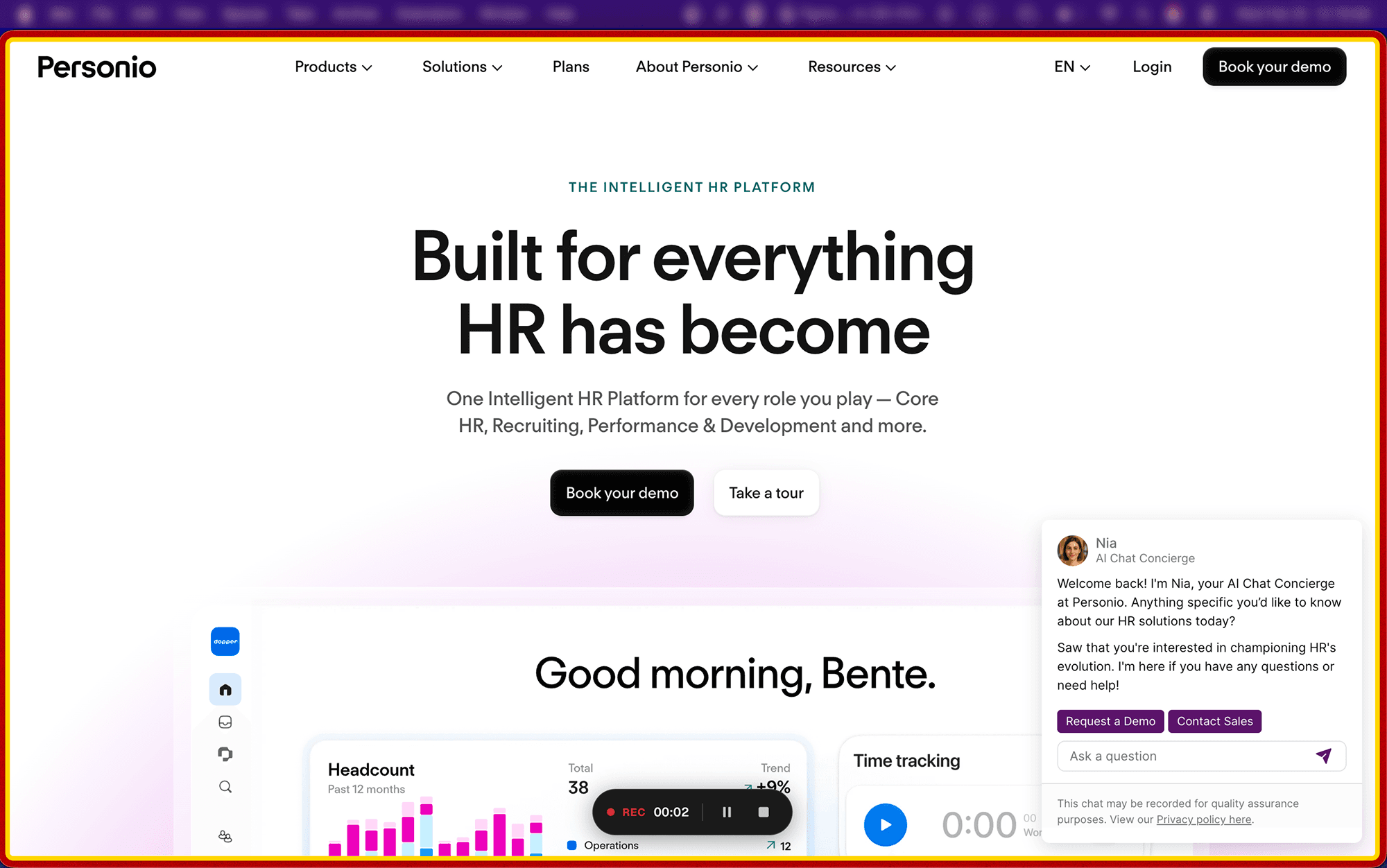
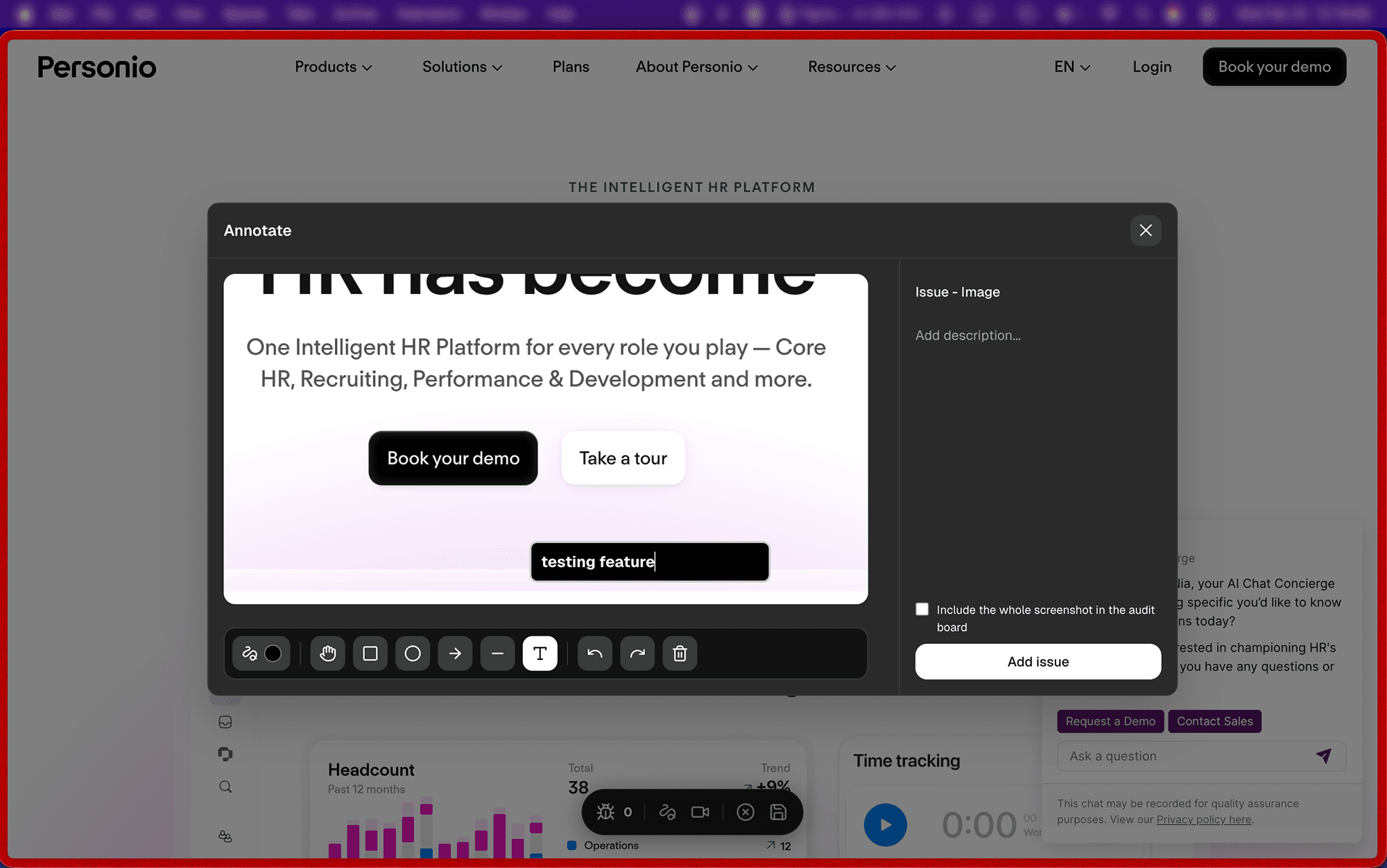
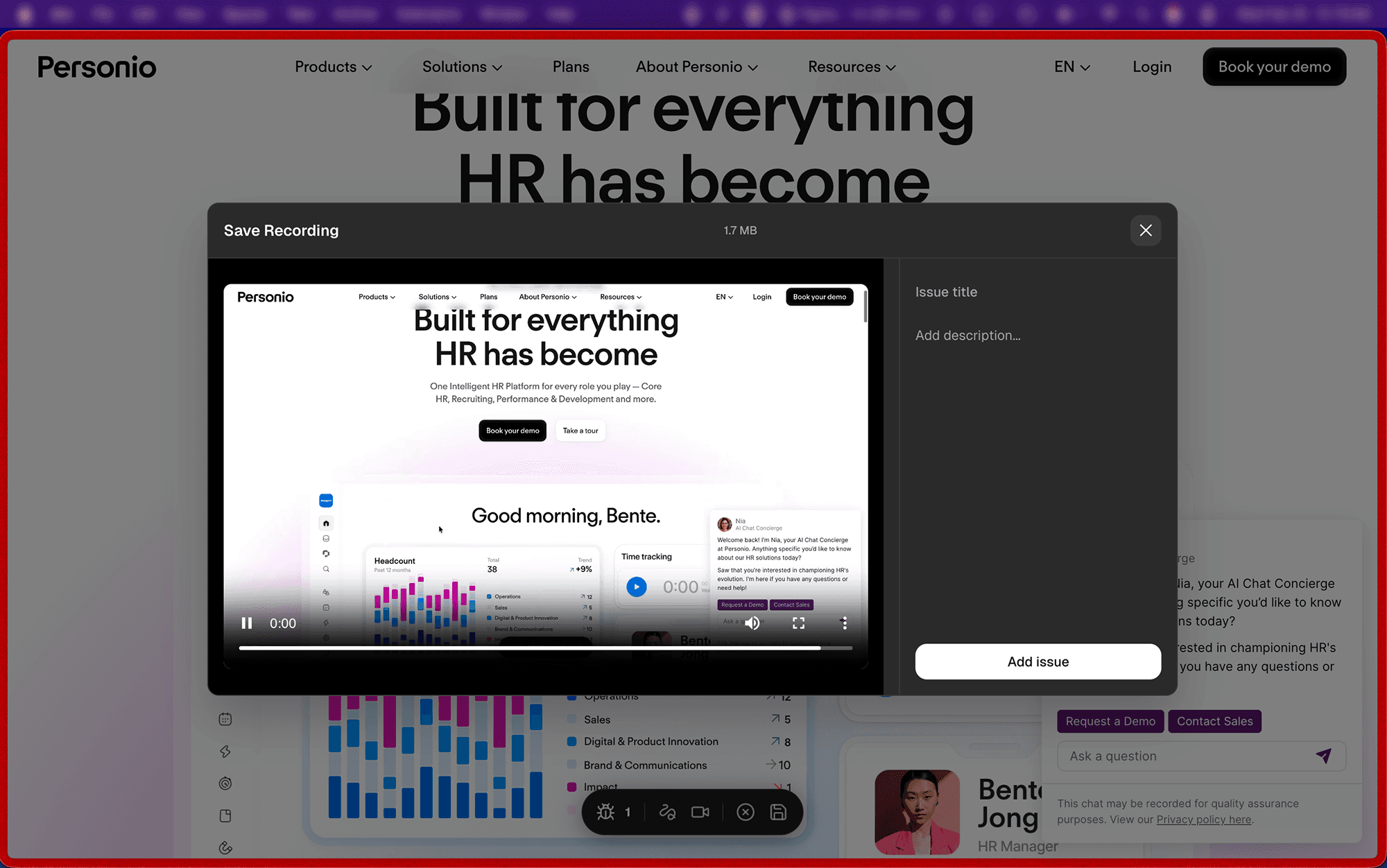
Instead of the old 'screenshot-and-slide' dance, you can now annotate screens, record videos, and log your observations the second you spot them, all without ever leaving your browser tab. By automating the structuring and storage of every finding, Loupe kills the formatting headaches that used to eat up hours. It turns a fragmented, stop-and-go process into a single, fluid motion from capture to review.
Ideation & Research
To figure out where Loupe needed to go, I started by looking at how people actually audit today. I dove into the workflows of QA testers, UX designers, and researchers to see how they juggle everything from usability reviews to bug tracking.
What I found was a mess of 'half-solutions.' Some tools were great for screenshots, others were okay for notes, but nothing tied them together. People were still stuck in this exhausting loop of jumping between three different apps just to document a single finding. That’s where the 'aha' moment happened: there wasn't a single tool that treated the audit as one continuous journey. During ideation, I shifted the focus from reporting an audit after the fact to capturing it in the moment. That’s how Loupe was born—a way to keep your head in the audit while the tool handles the heavy lifting of organizing the insights.
My building process
Once the vision for Loupe was clear, it was time to actually build it. I started by mapping out the flows and wireframing the core experience, always coming back to one question: How can I make this invisible? I wanted the tool to support the auditor, not distract them.
To move fast without losing quality, I used Cursor as a coding partner. It wasn't about letting an AI blindly generate code; it was a back-and-forth collaboration. I’d provide the design intent and the logic, and we’d iterate on the implementation together until it matched my vision.
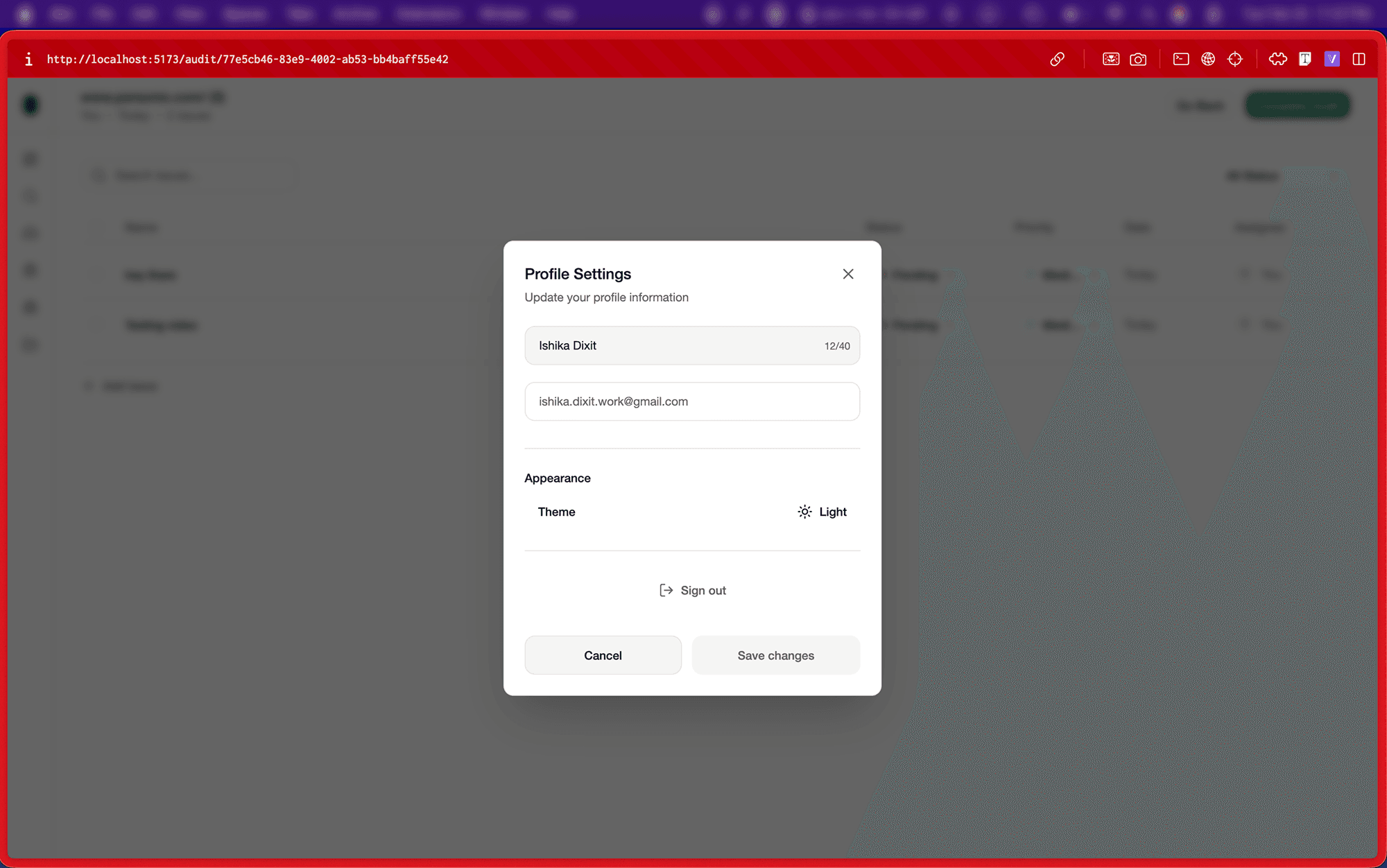
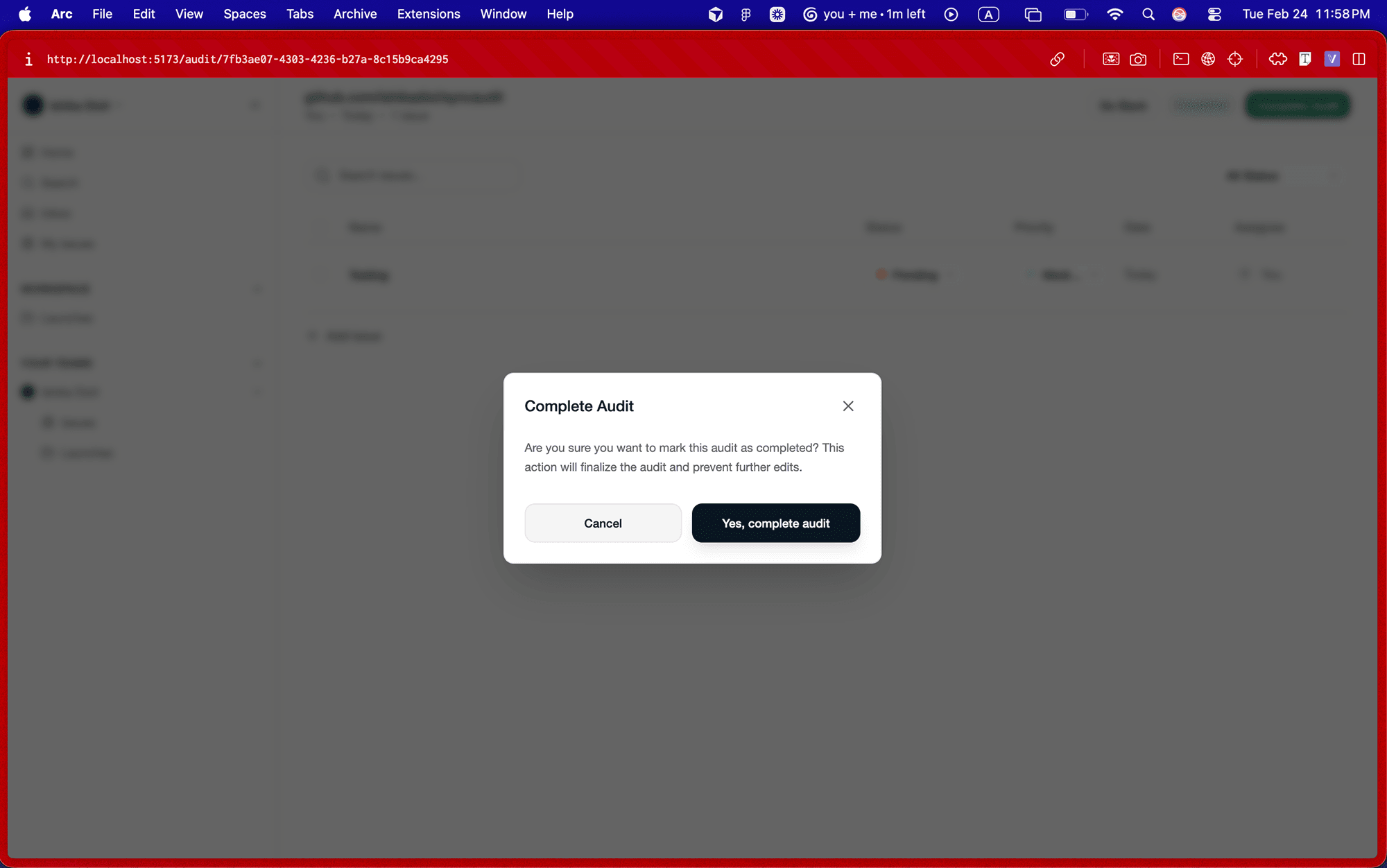
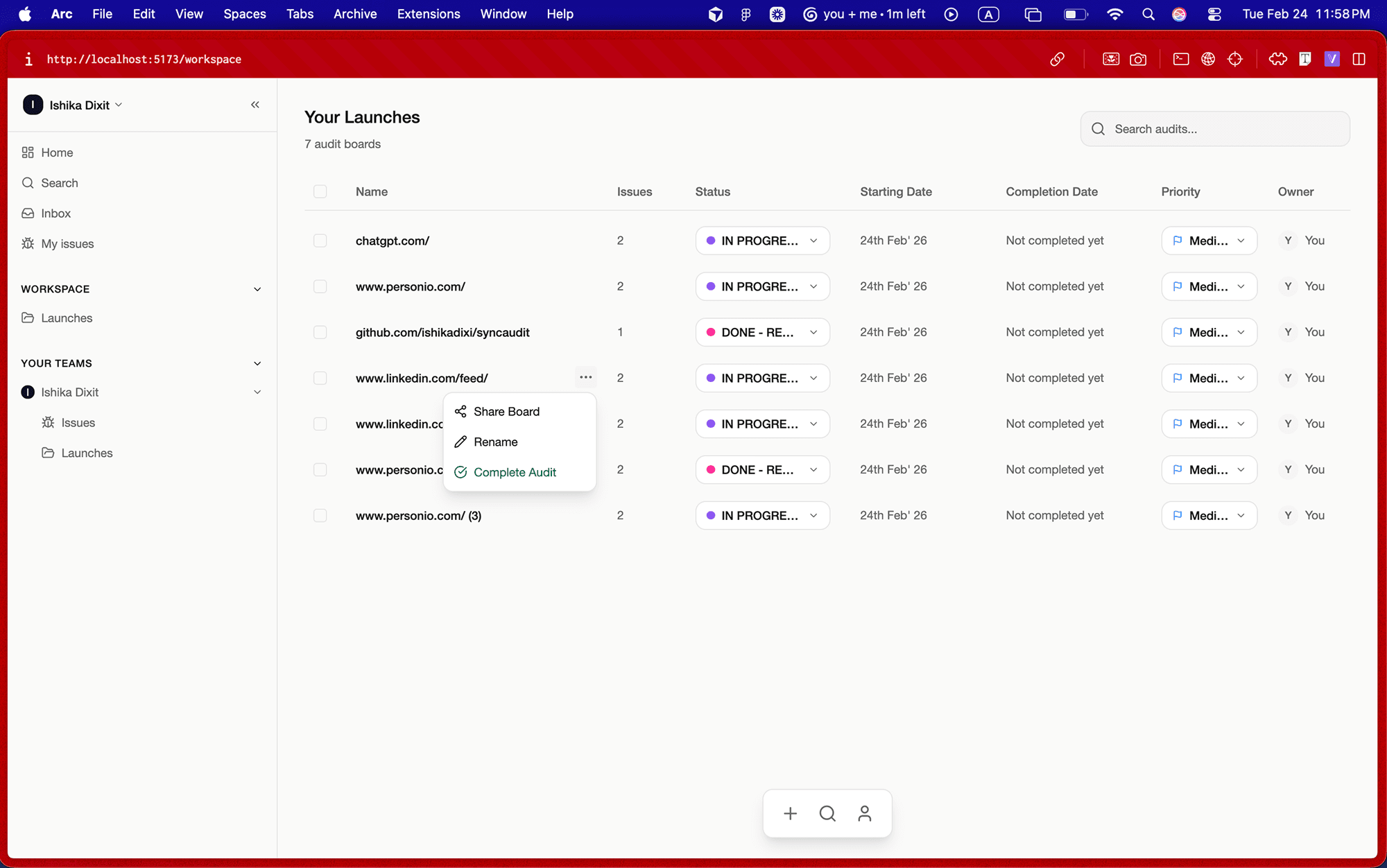
A big chunk of this phase was finding the right 'look and feel.' I went through several iterations of the design language before landing on a system that felt lightweight and non-intrusive—which is crucial for a tool that literally sits on top of other products. It was a constant cycle of testing, refining, and stripping away the 'extra' until the interface felt intentional, not just feature-heavy. The goal was simple: make auditing feel fast and, for the first time, actually effortless.
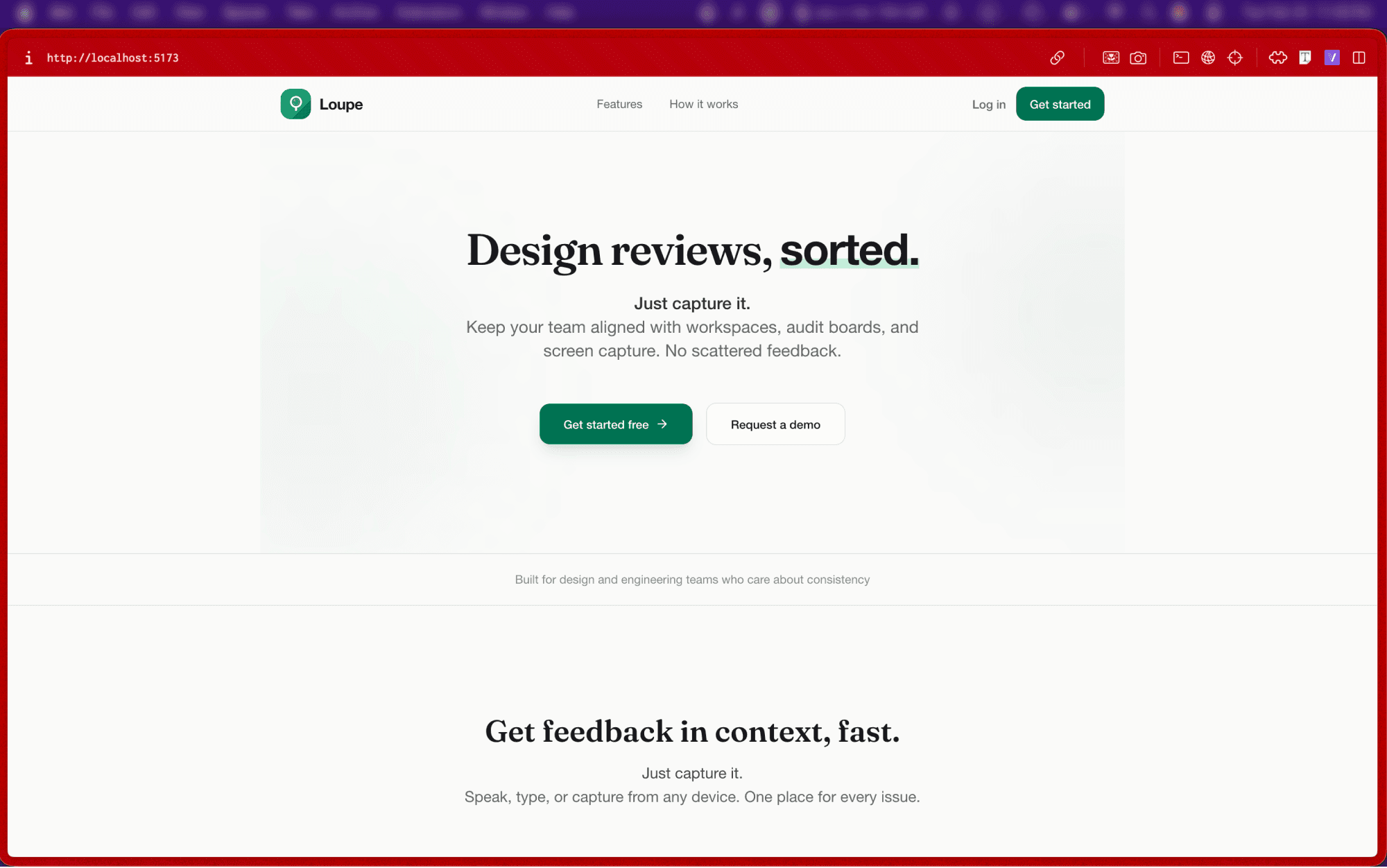
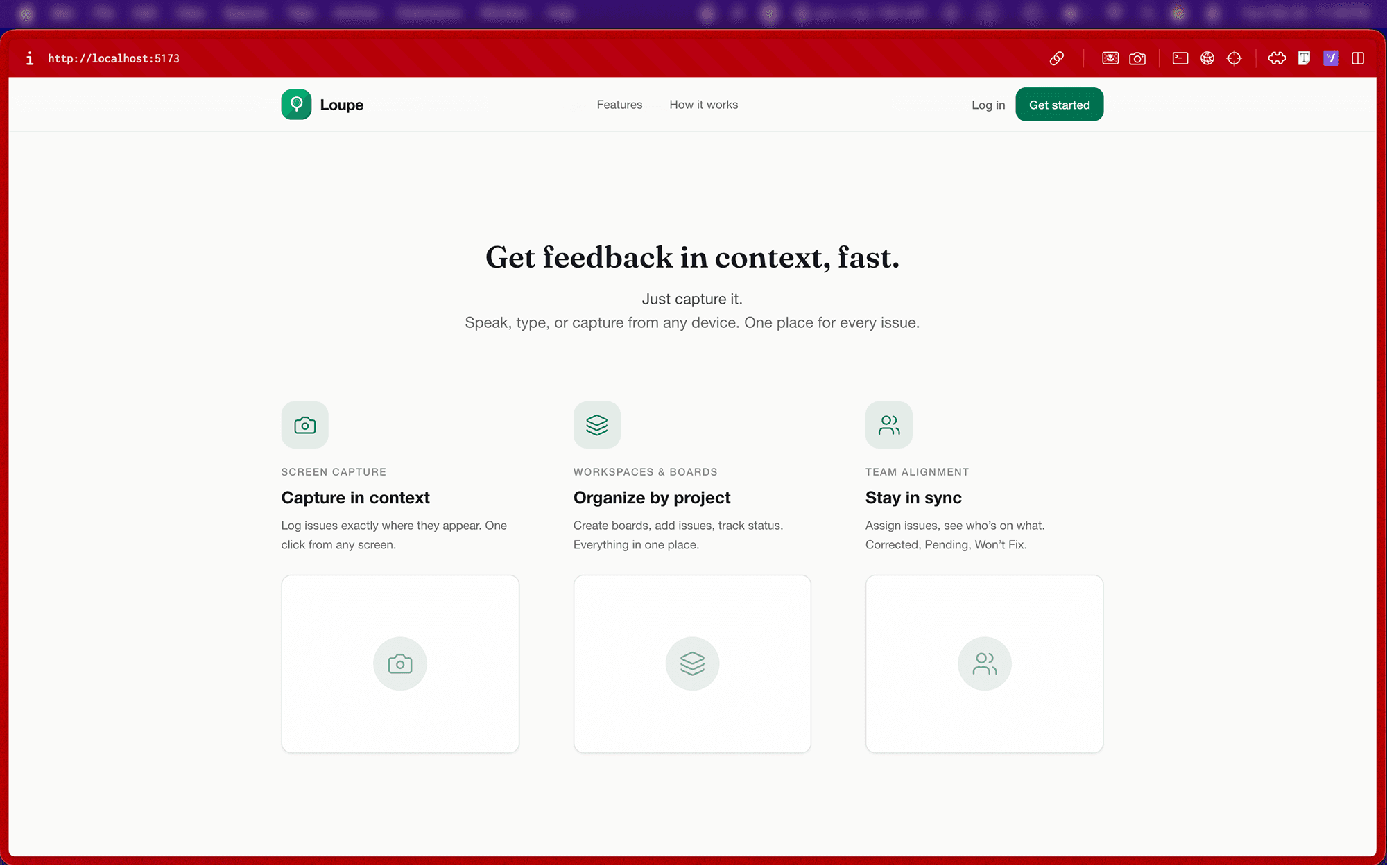
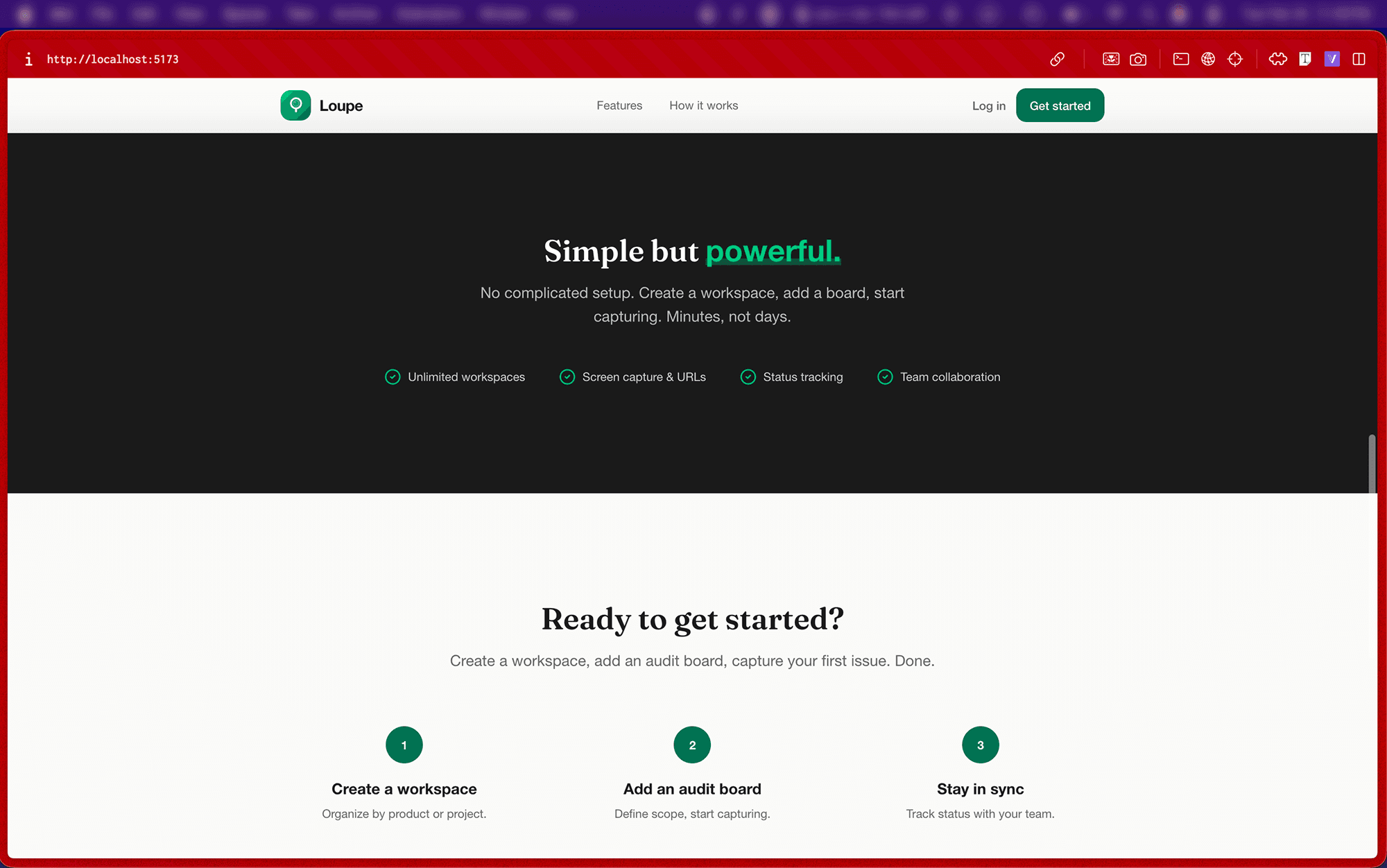
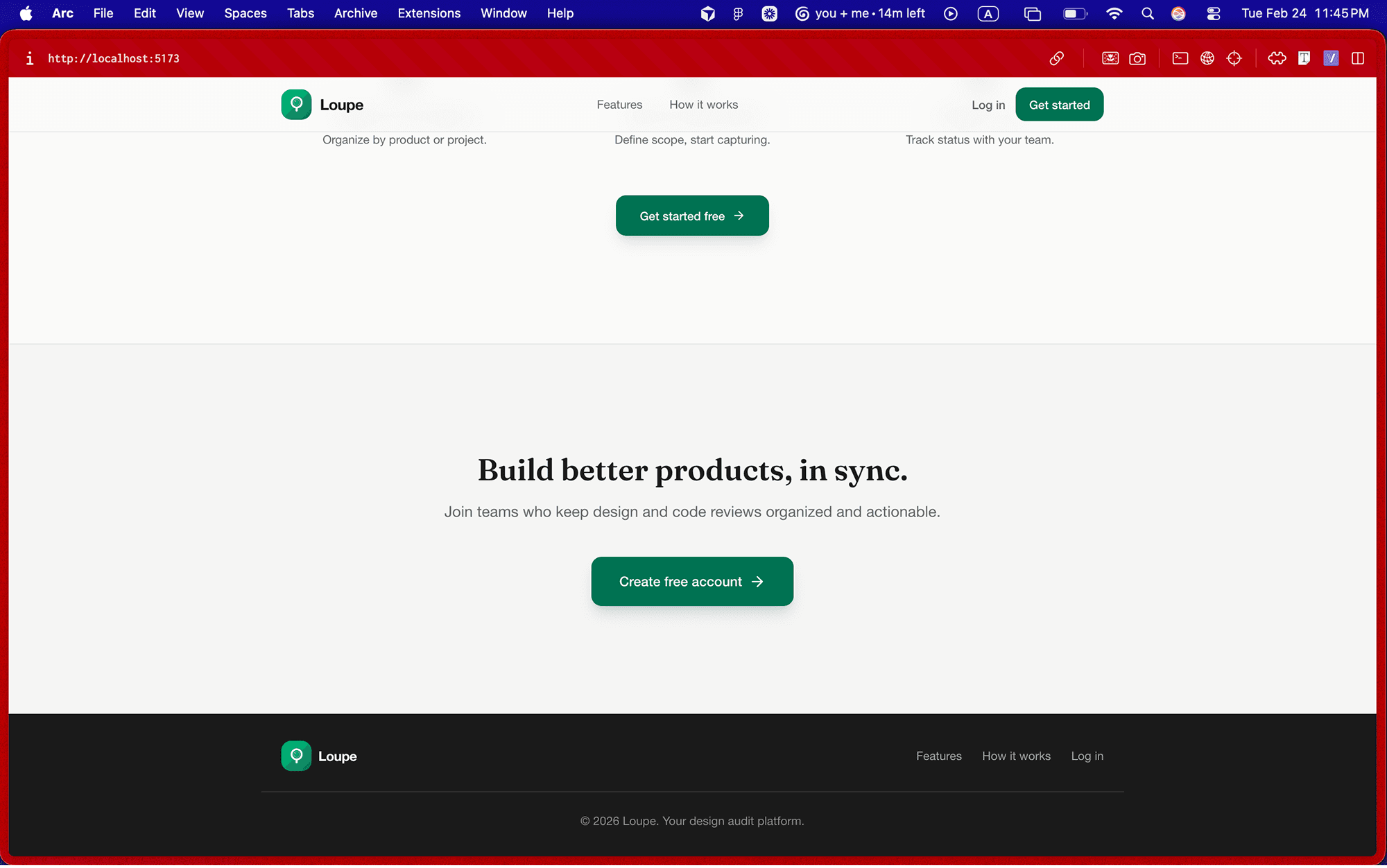
Landing page
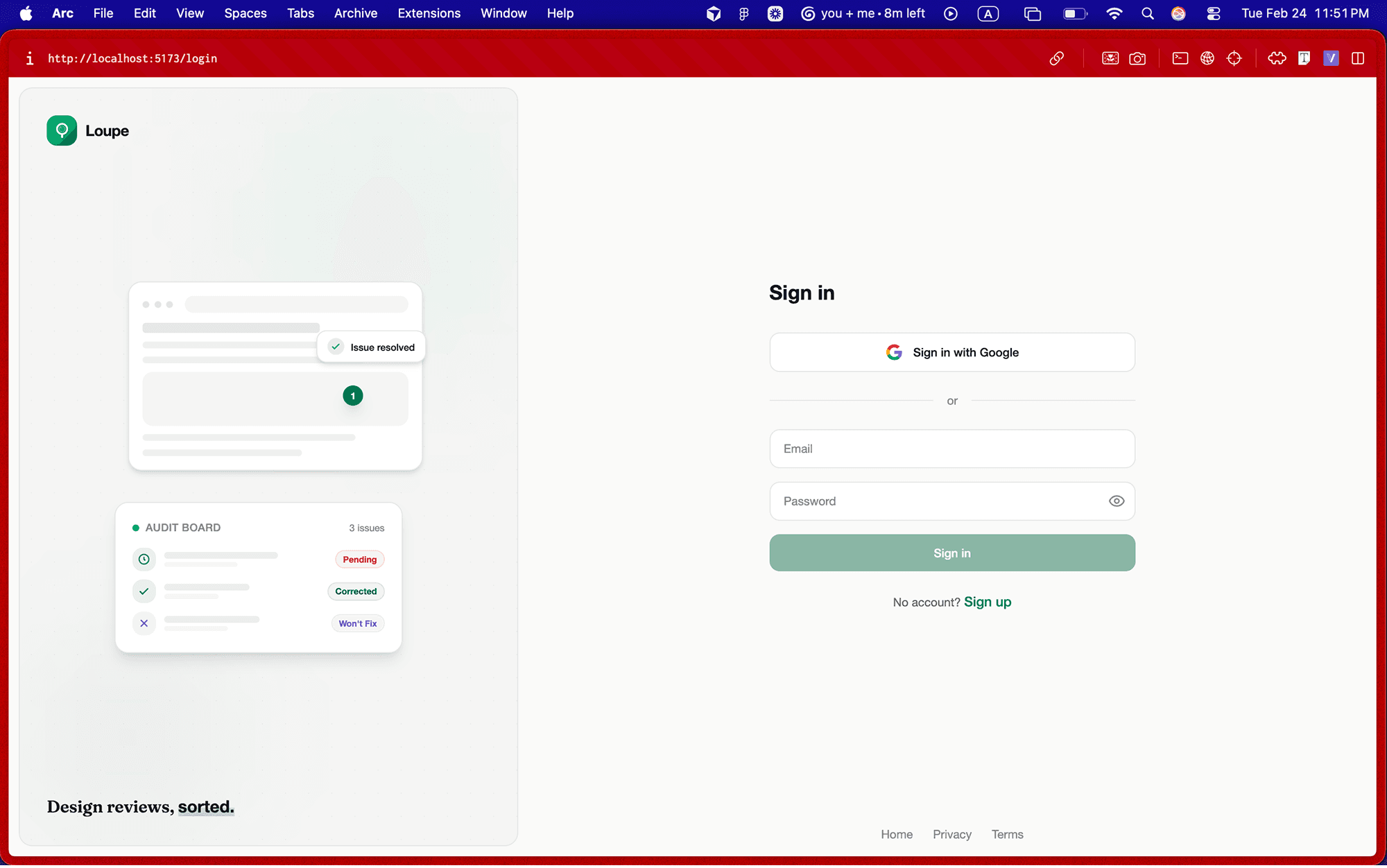
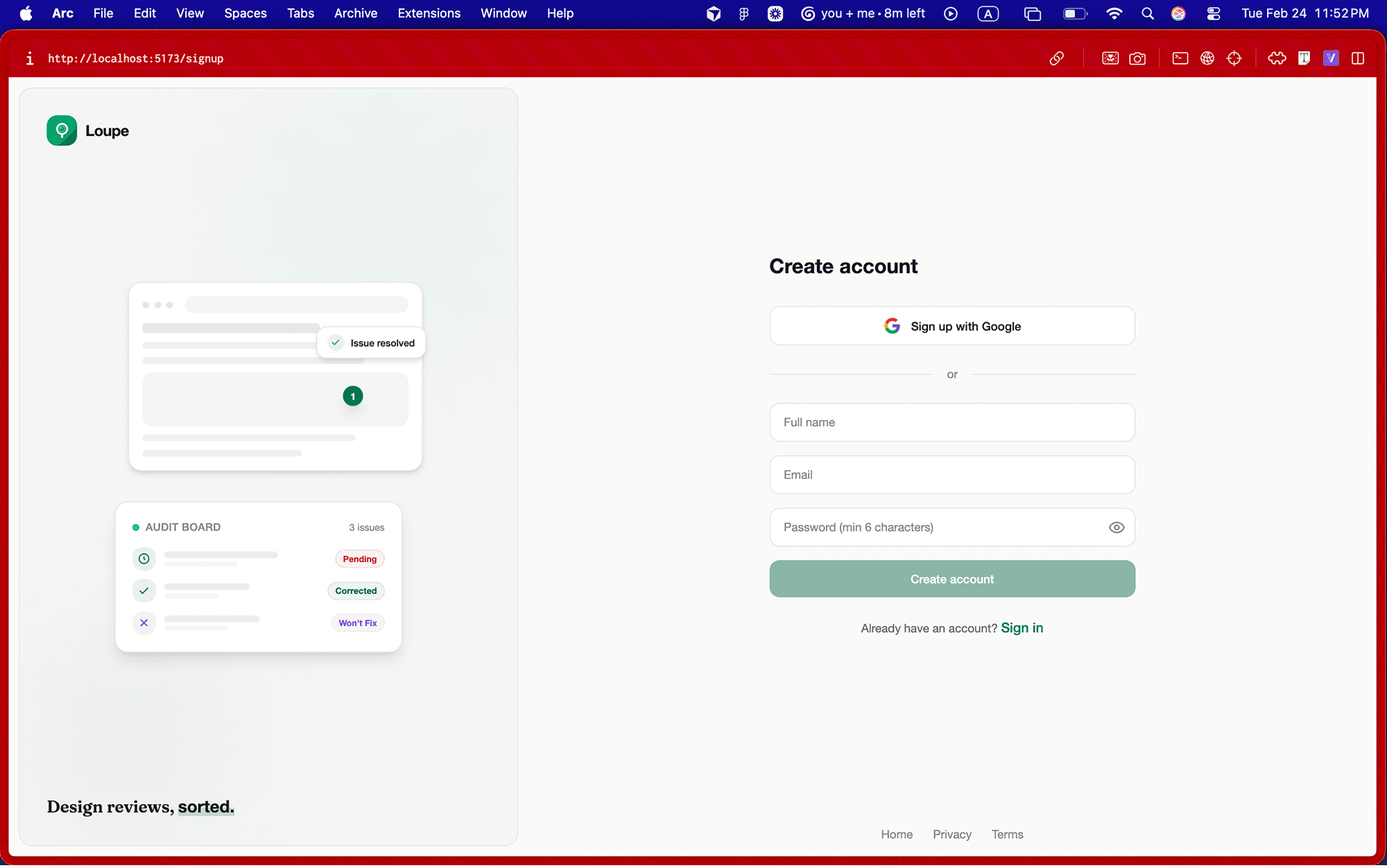
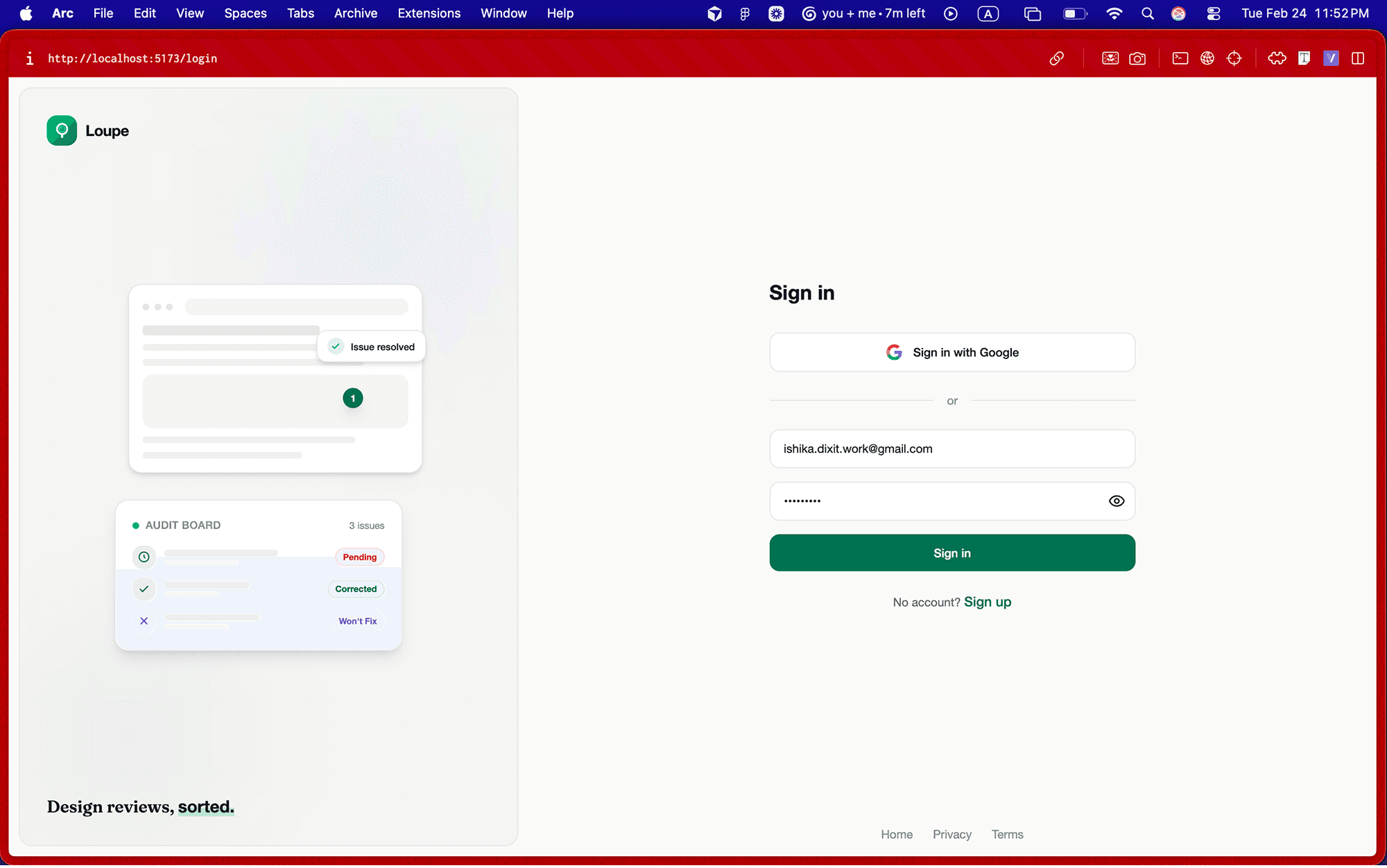
onboarding screens
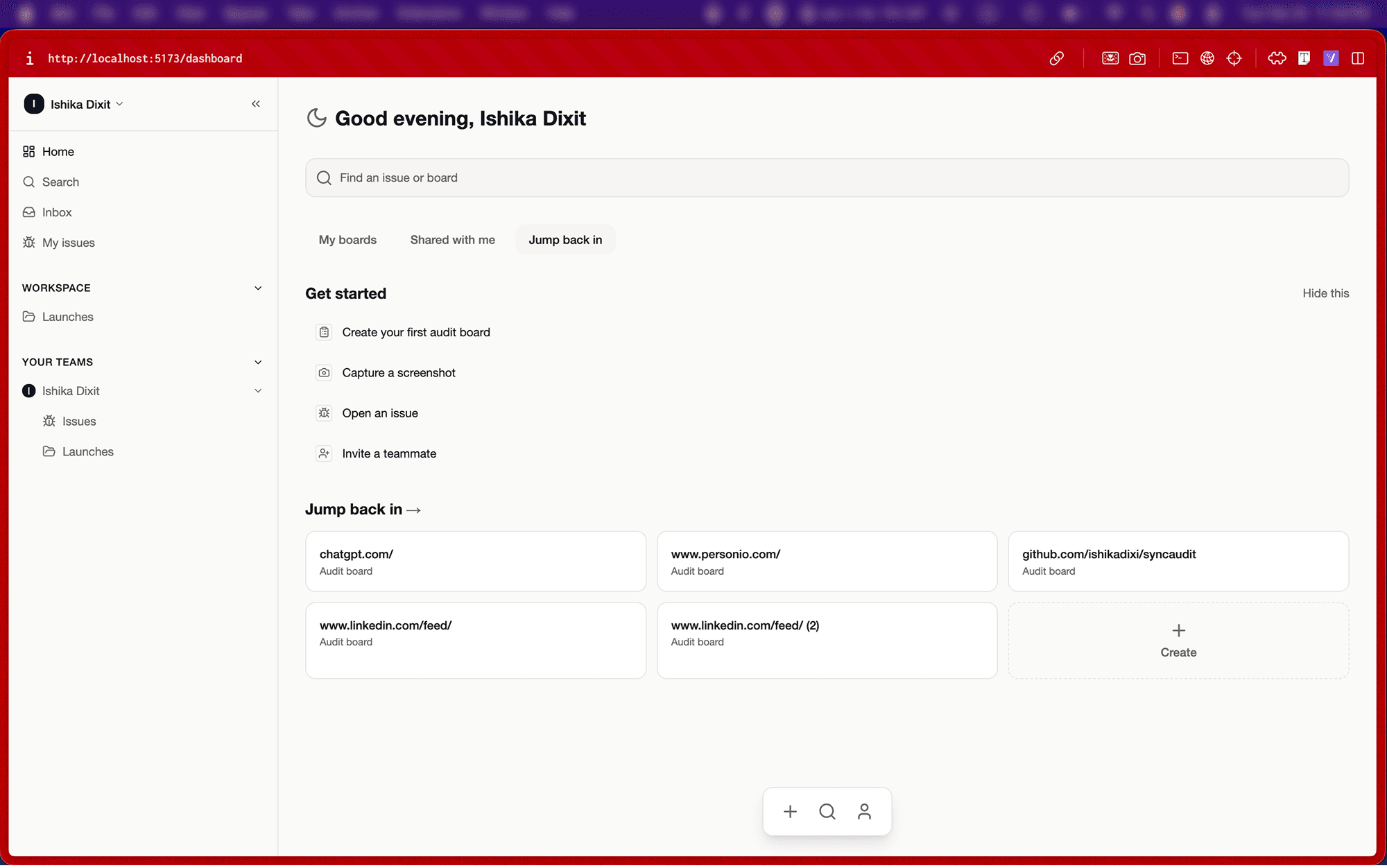
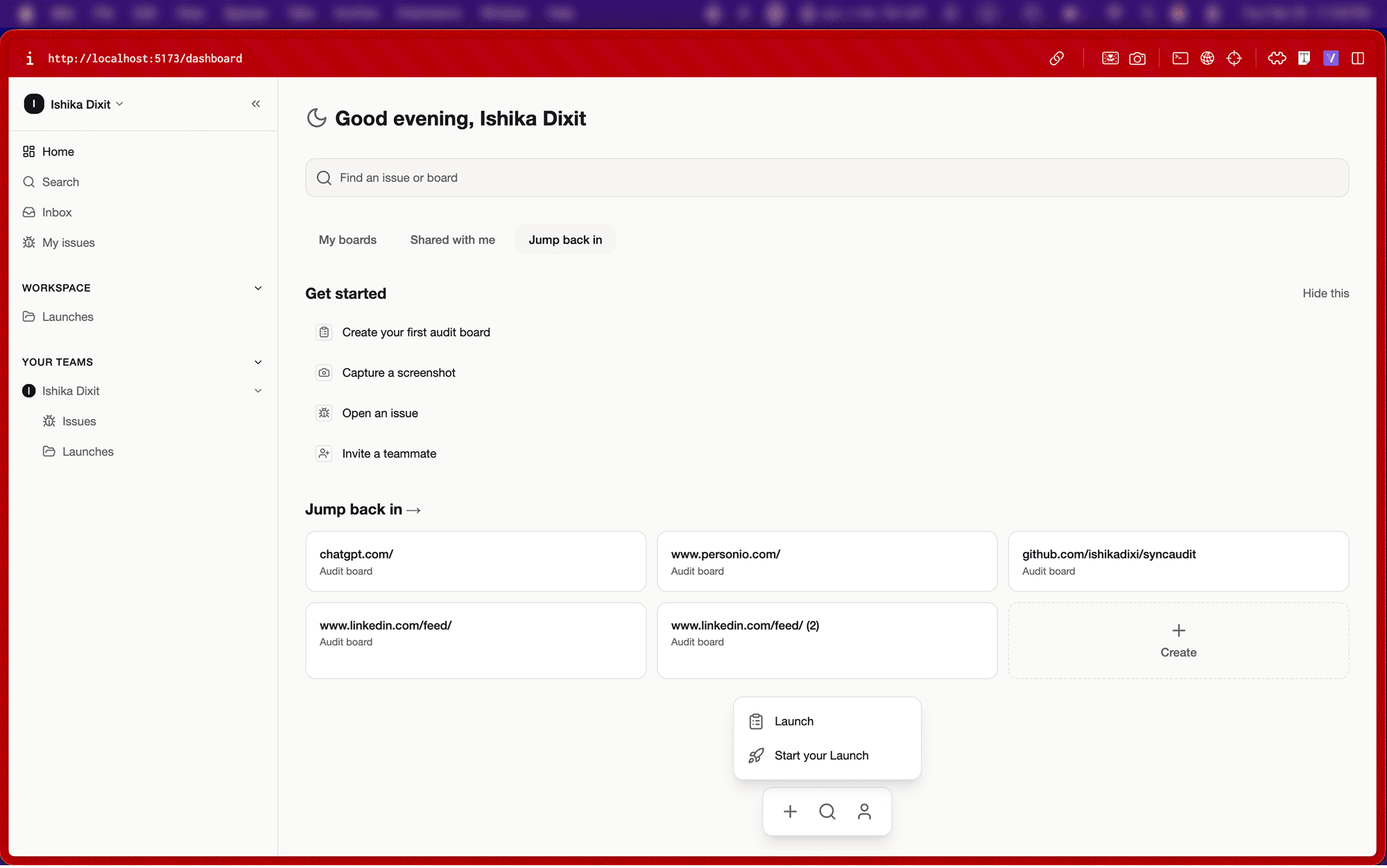
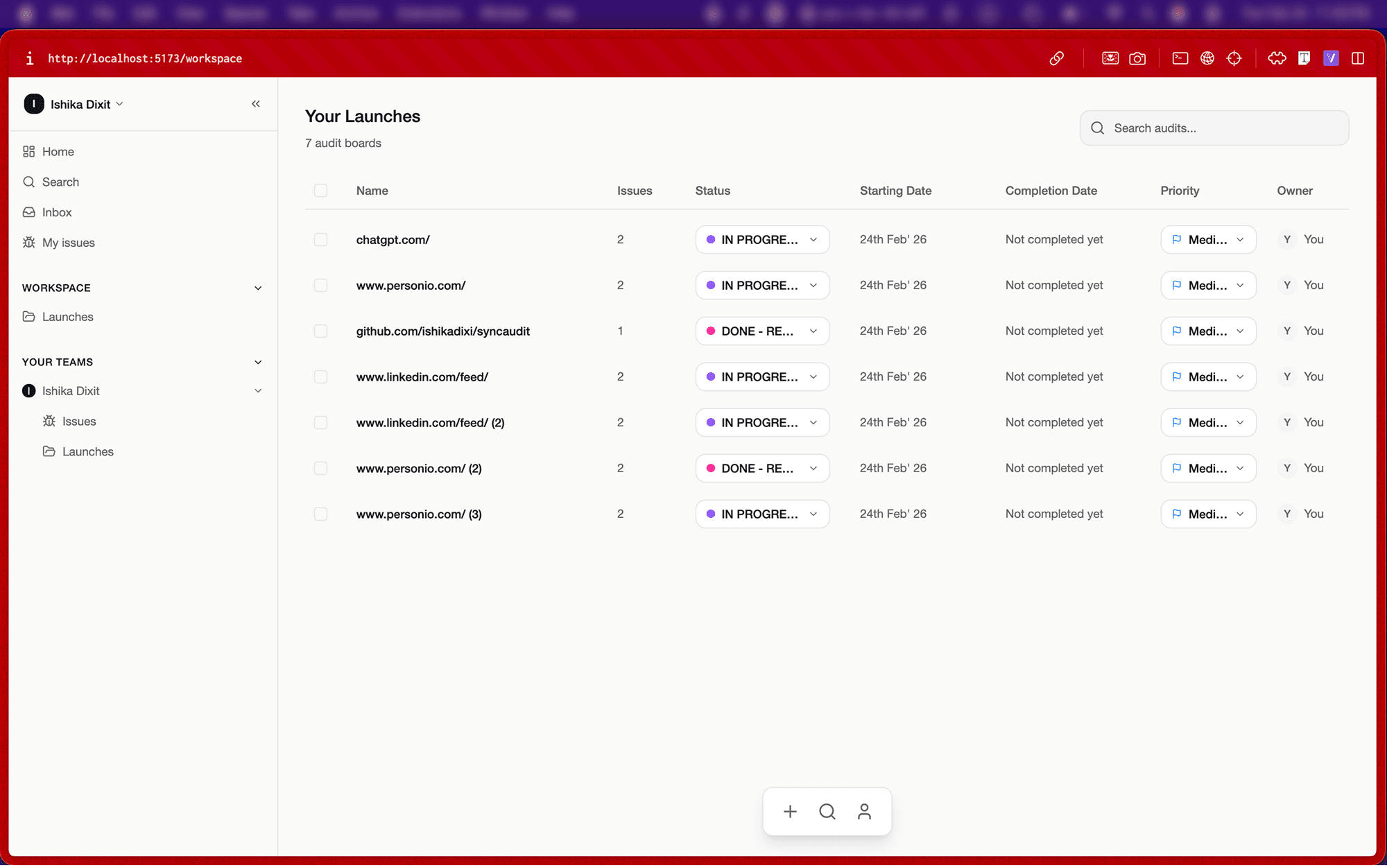
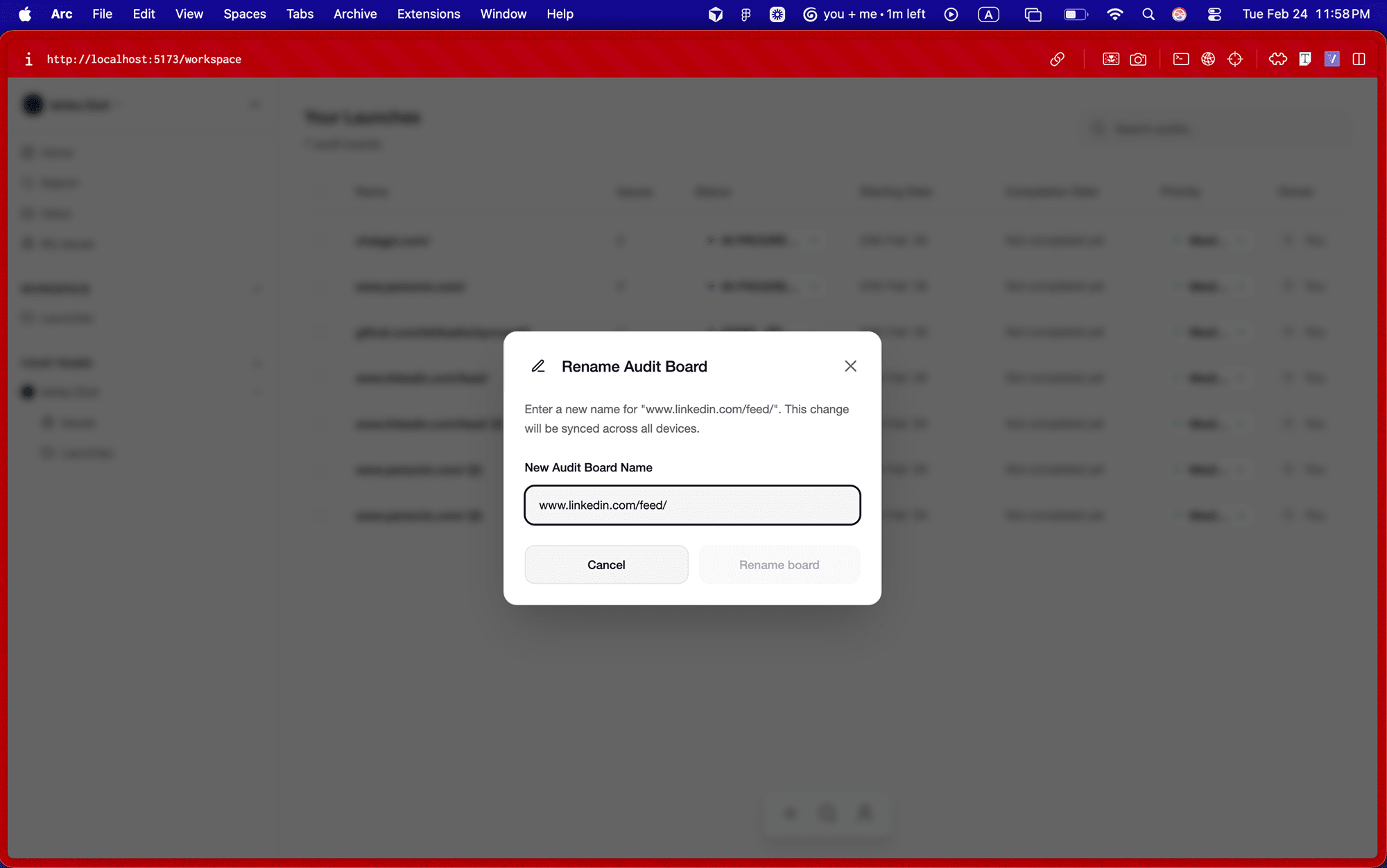
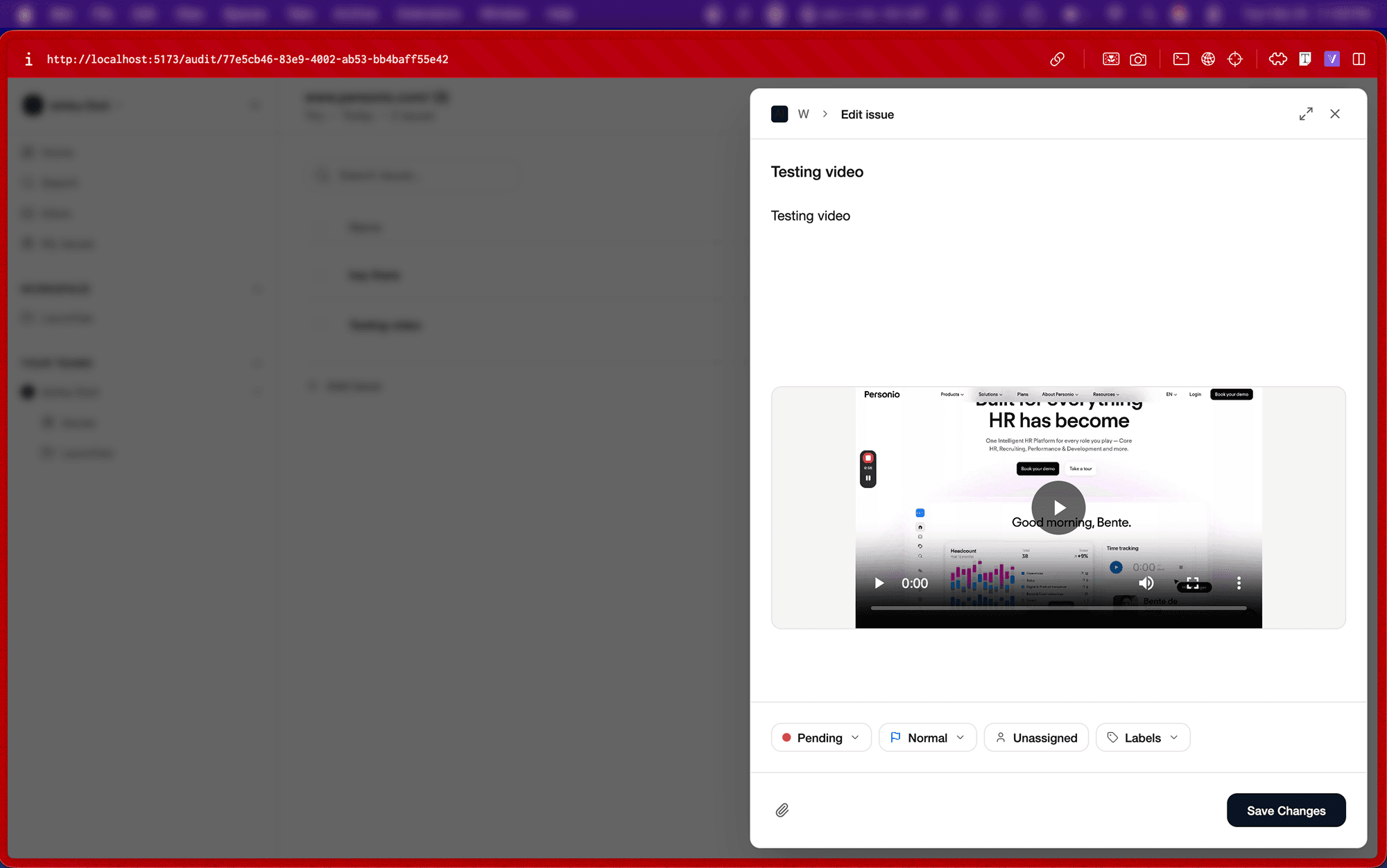
Light MODE
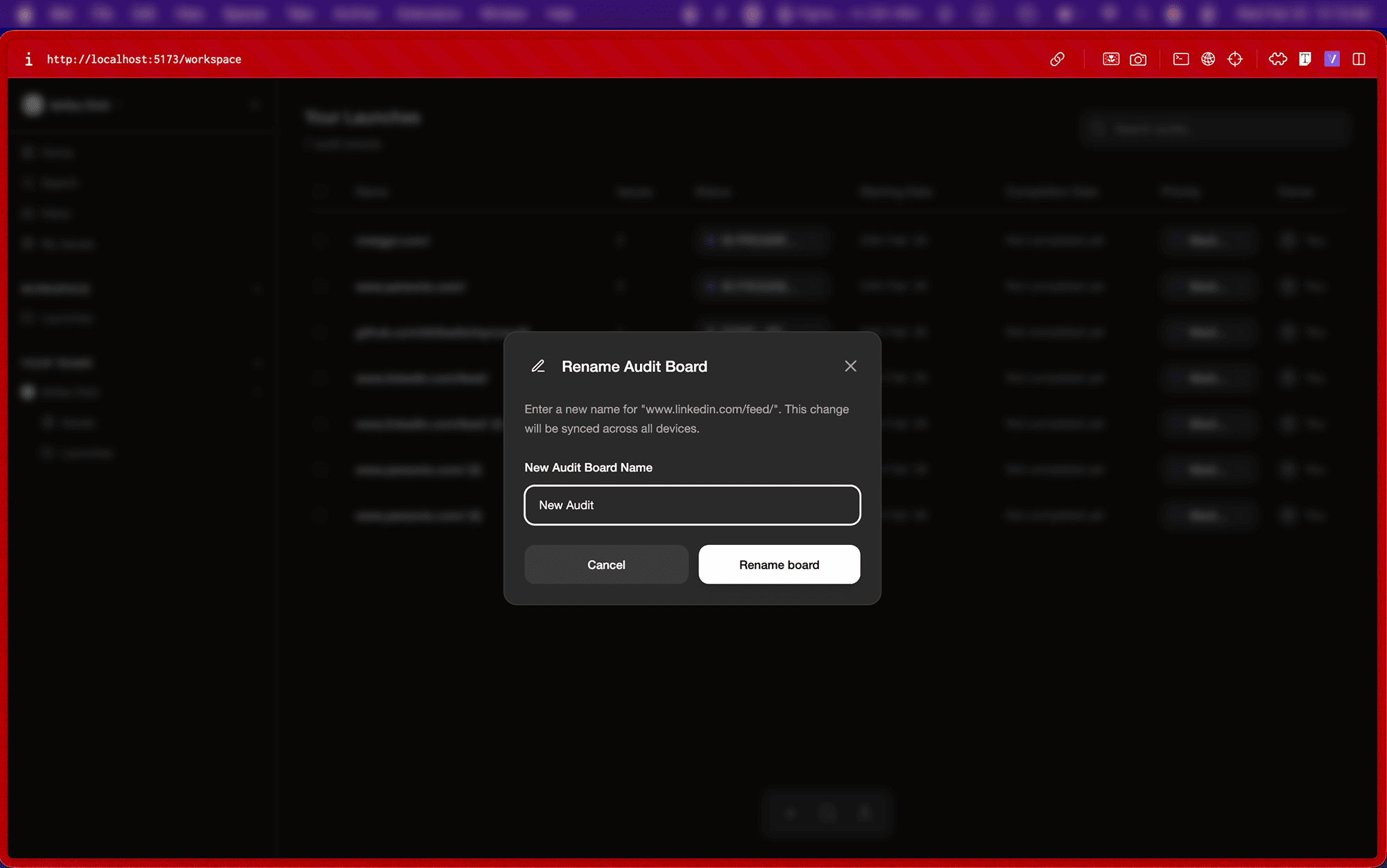
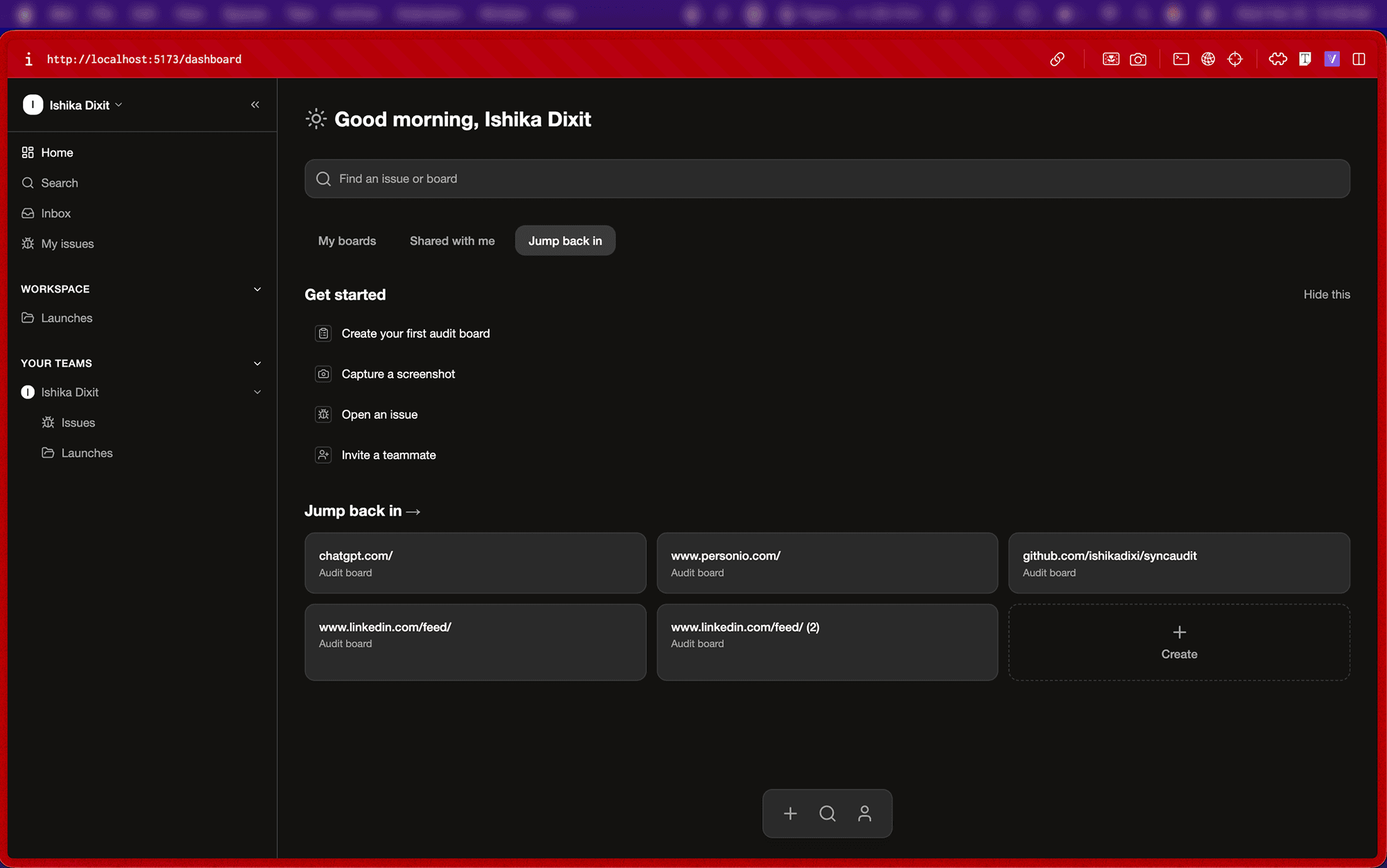
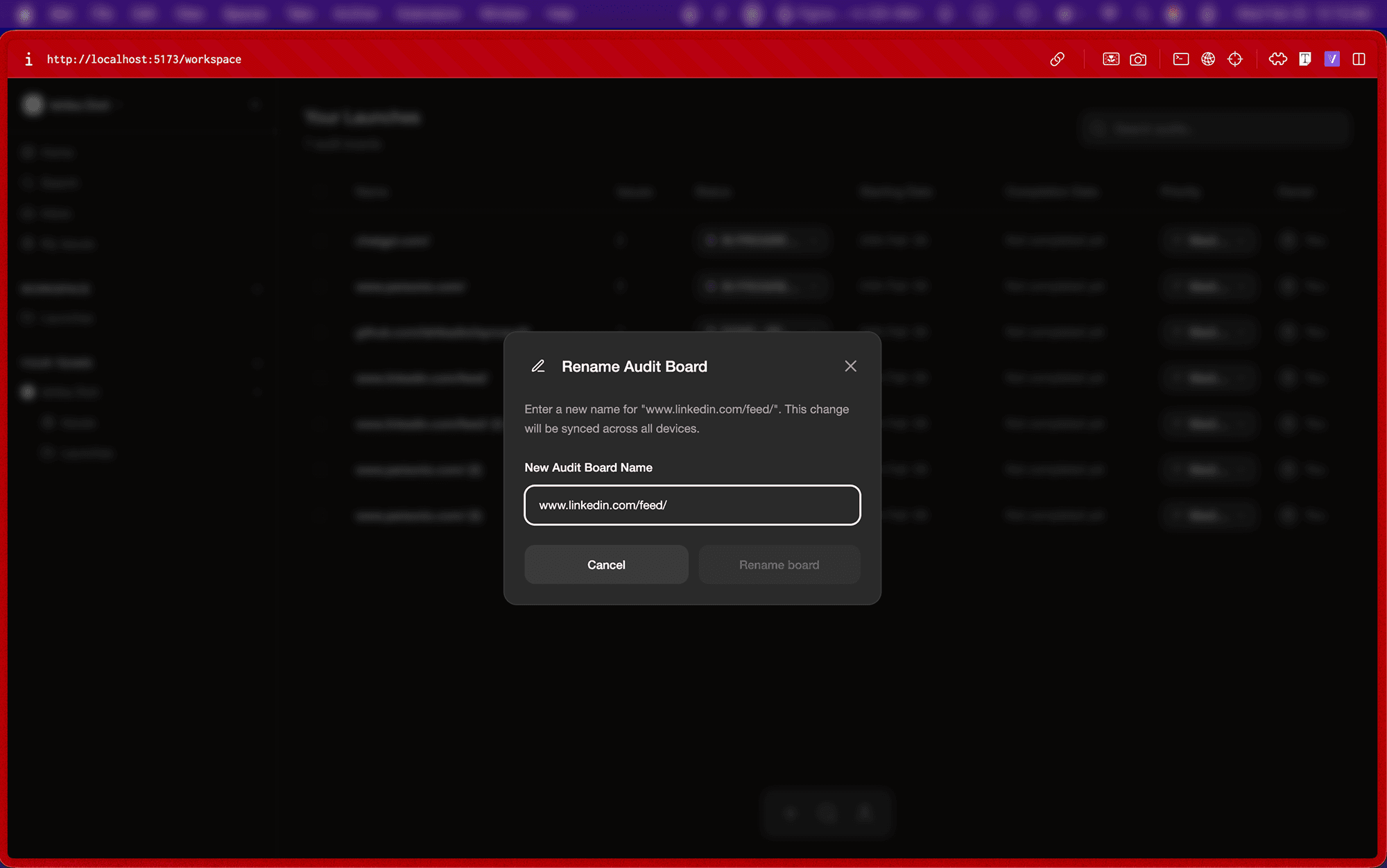
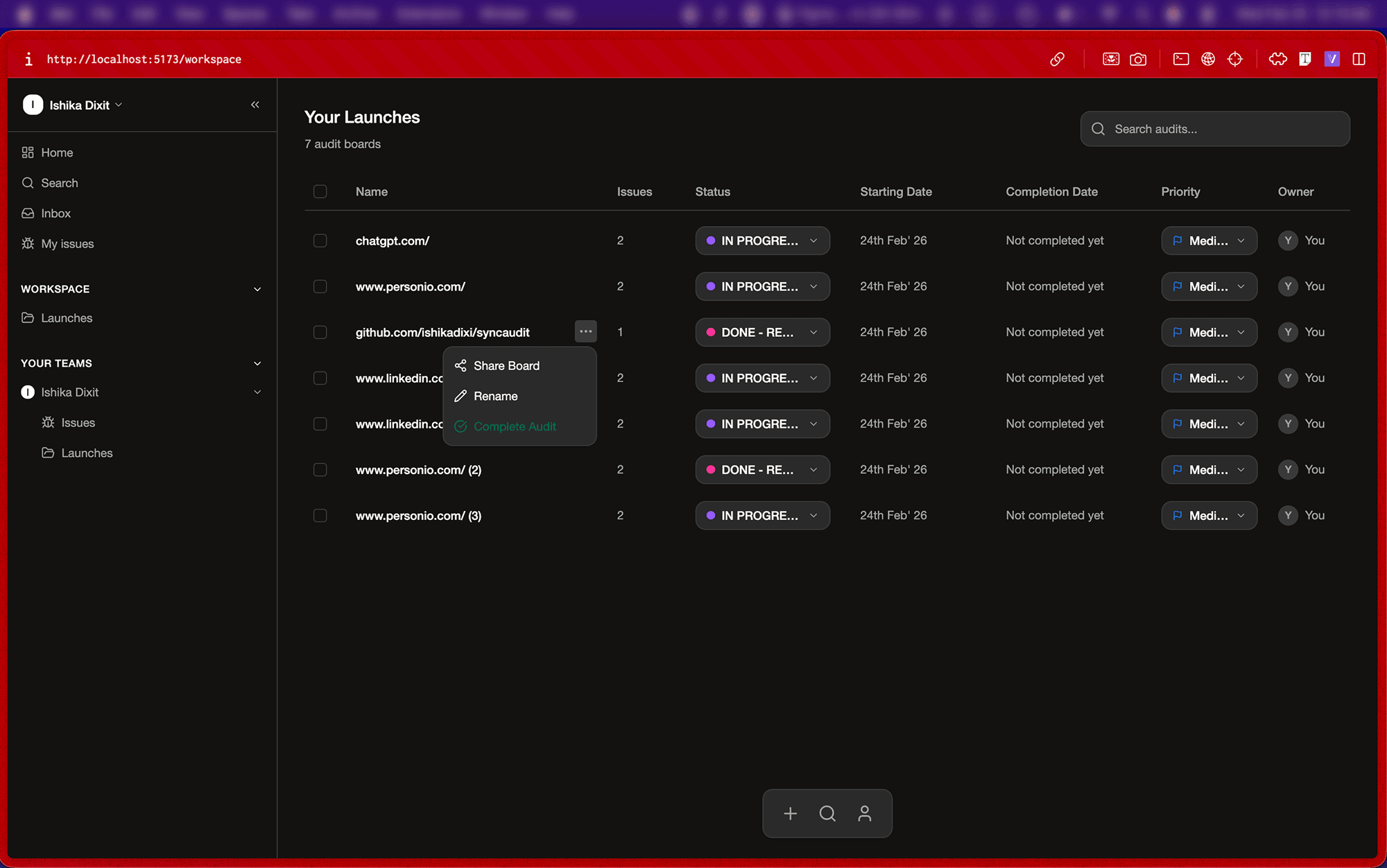
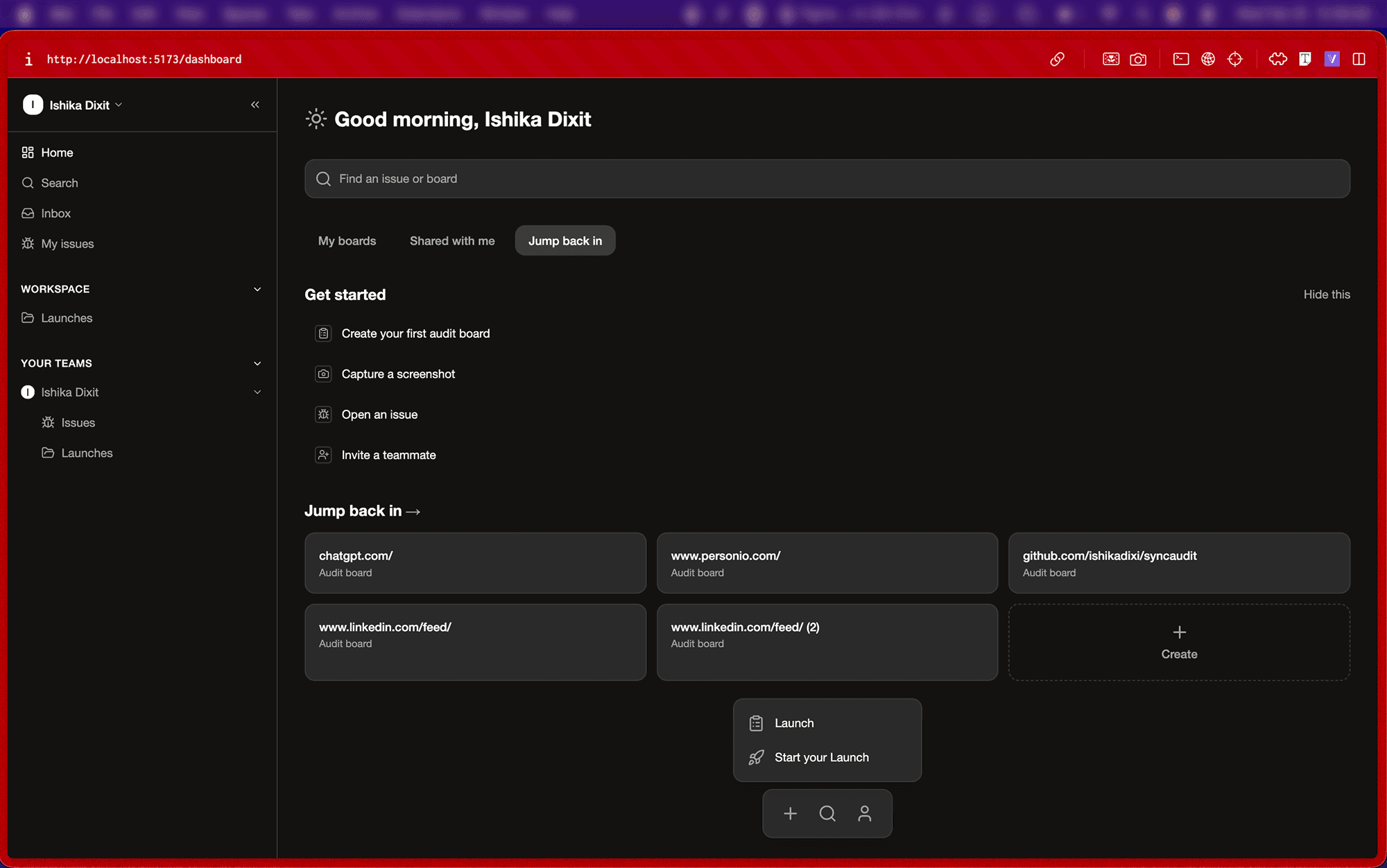
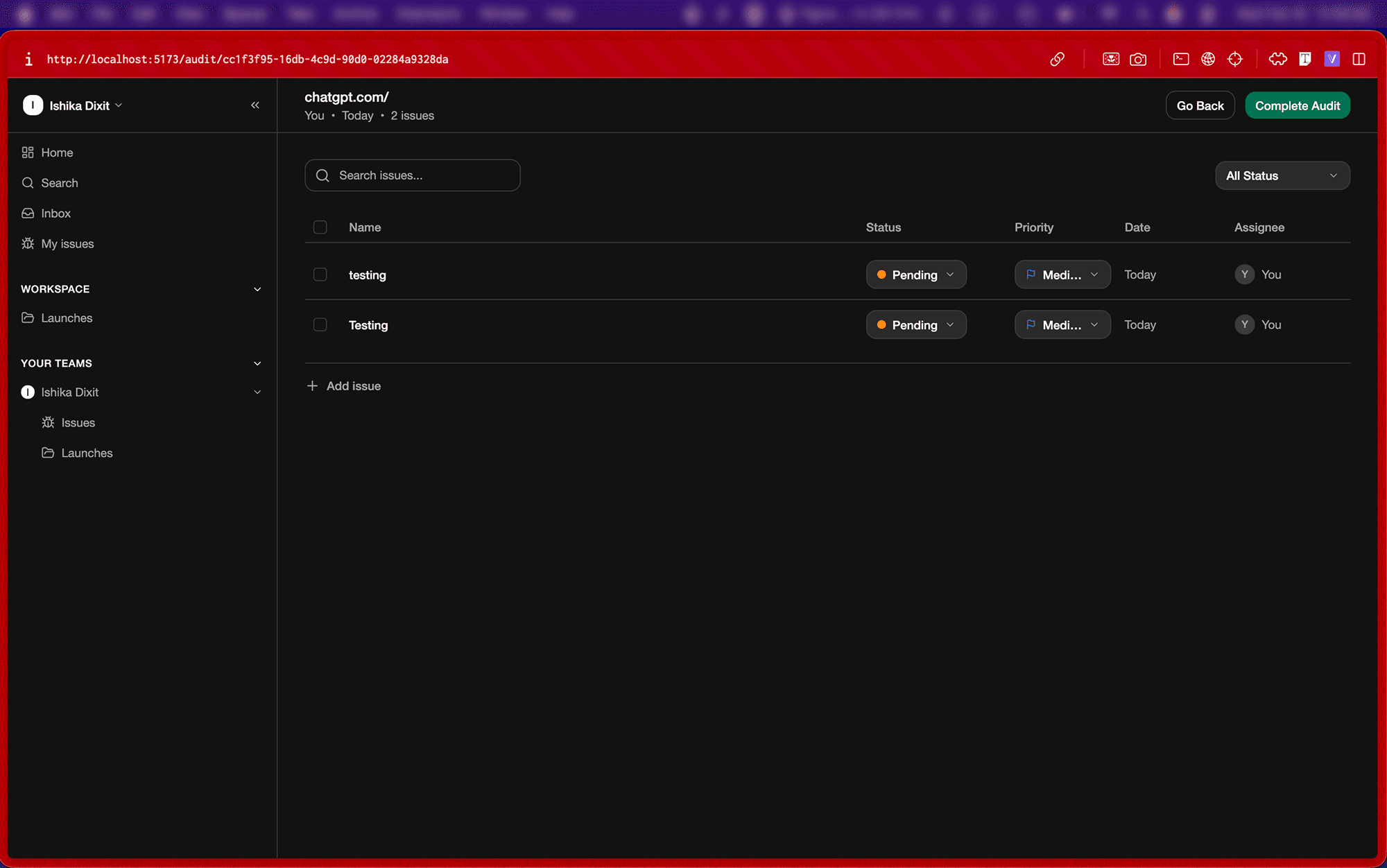
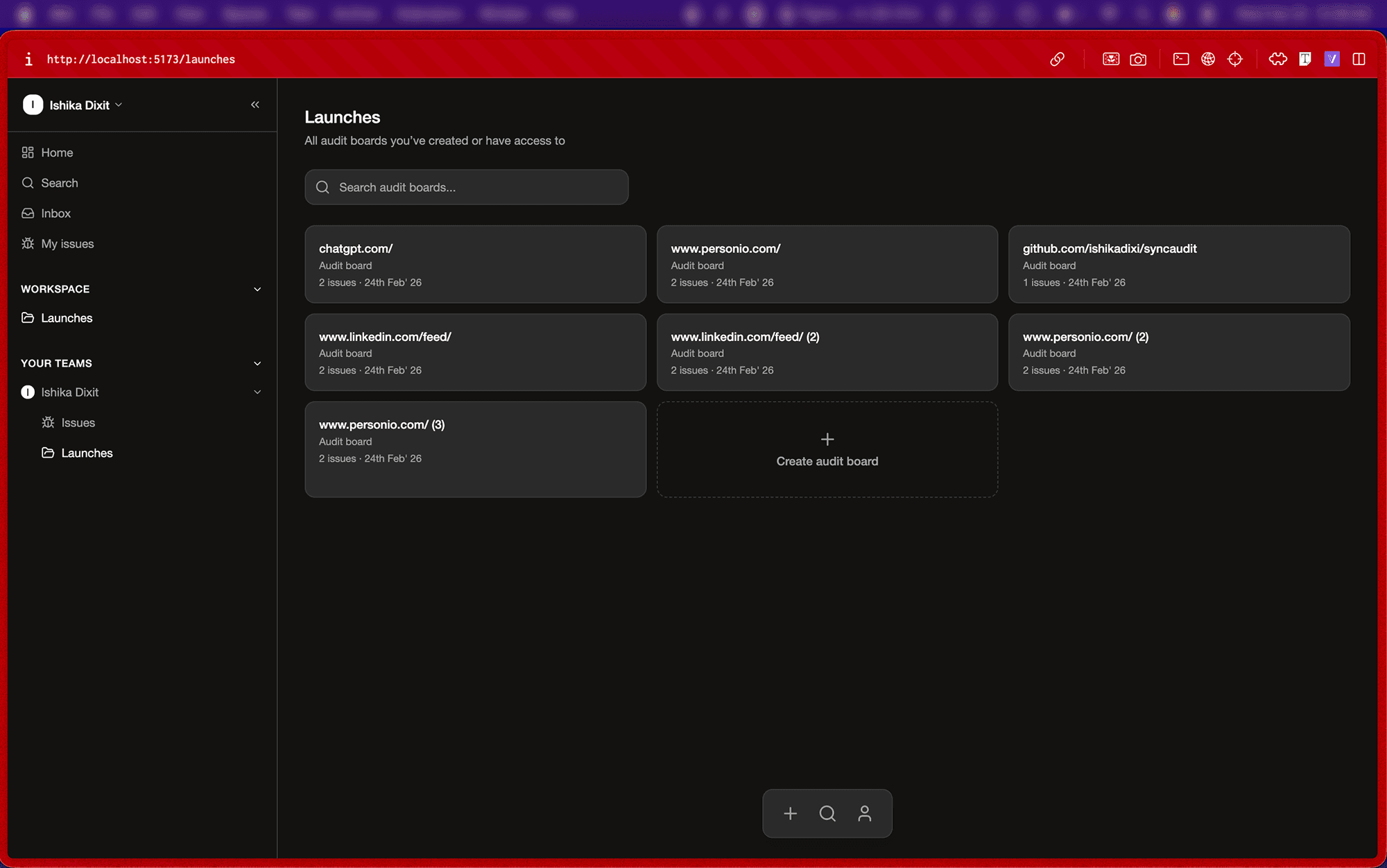
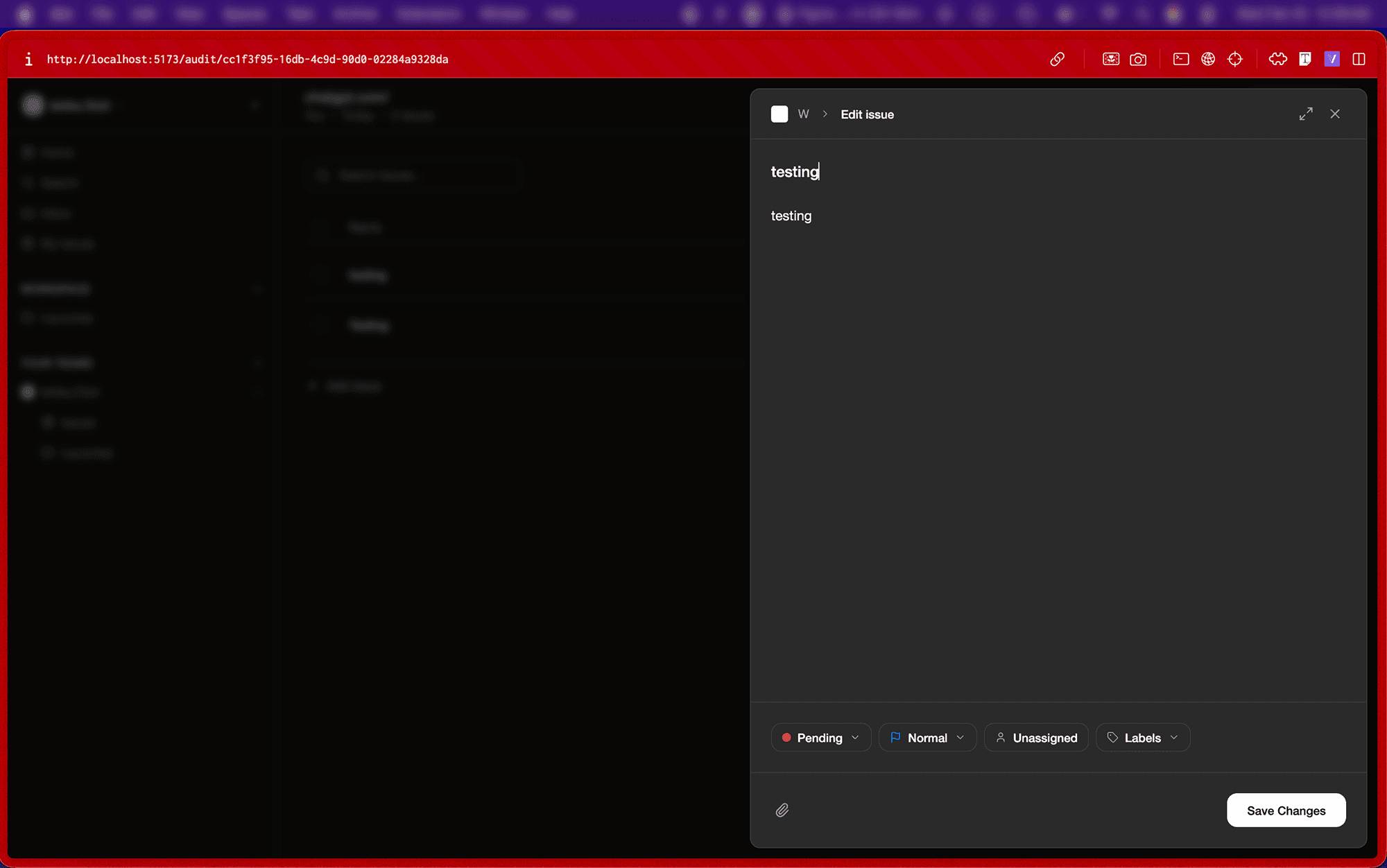
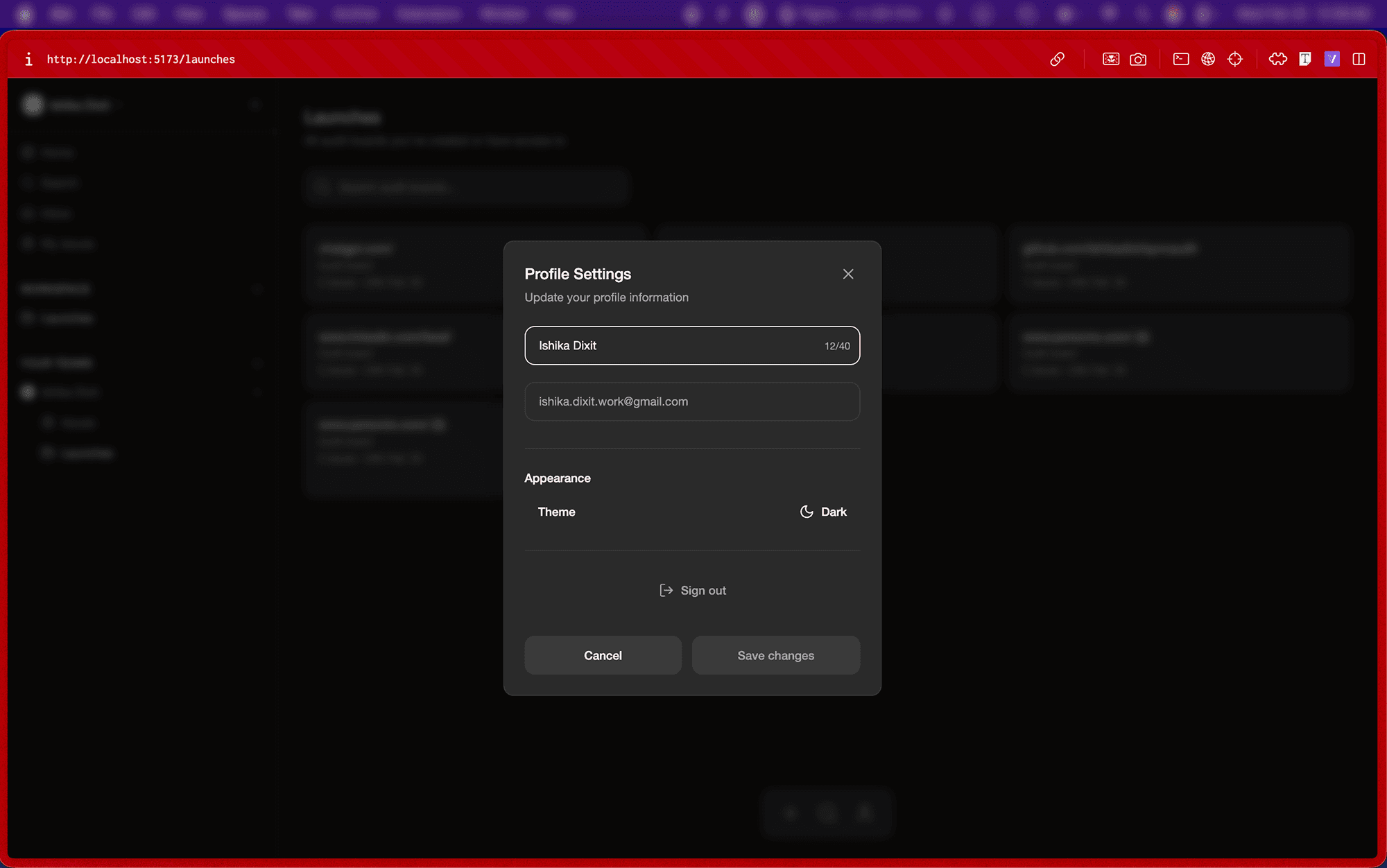
dark mode
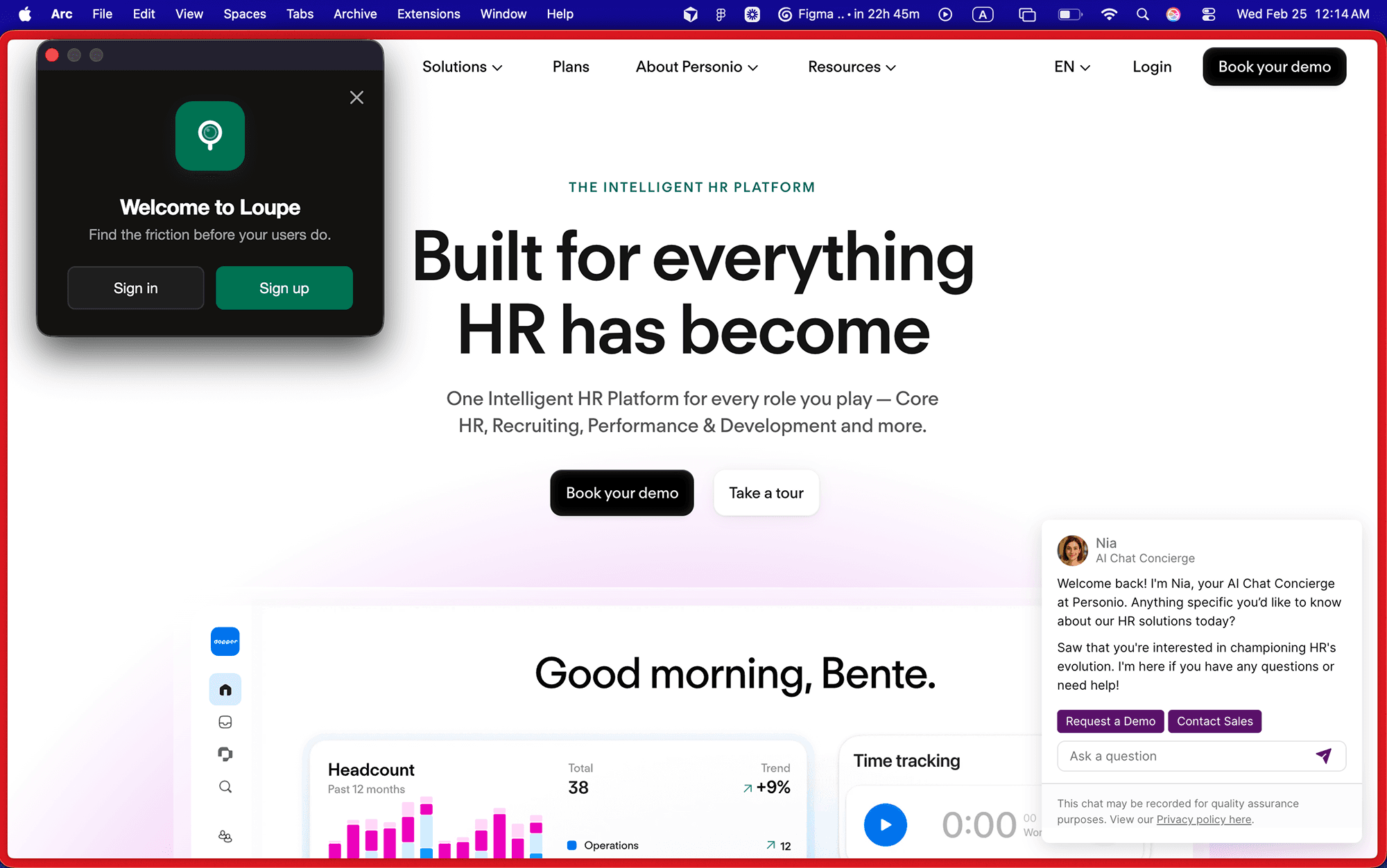
text based questions
Credits
Closing Thoughts
Loupe was born from a simple realization: the best tools are the ones that stay out of the way. By removing the "toggle tax" between finding an issue and documenting it, we move from a fragmented chore to a fluid, real-time experience. It’s about protecting the auditor's focus, ensuring that no insight is lost in the shuffle of switching tabs.
WORK INVOLVED
Product Design
Design Systems
User Research
Tools
Figma
Cursor
team
Design
Ishika Dixit
Motion
Ishika Dixit
Research
Ishika Dixit
Writing
Ishika Dixit